




Thousands of people receiving Universal Credit could find it easier to get help with their council tax bills under new plans being considered by a local council in England.
The proposals aim to simplify the way Council Tax Reduction is calculated, make the support easier to understand and reduce the paperwork faced by people on low incomes.
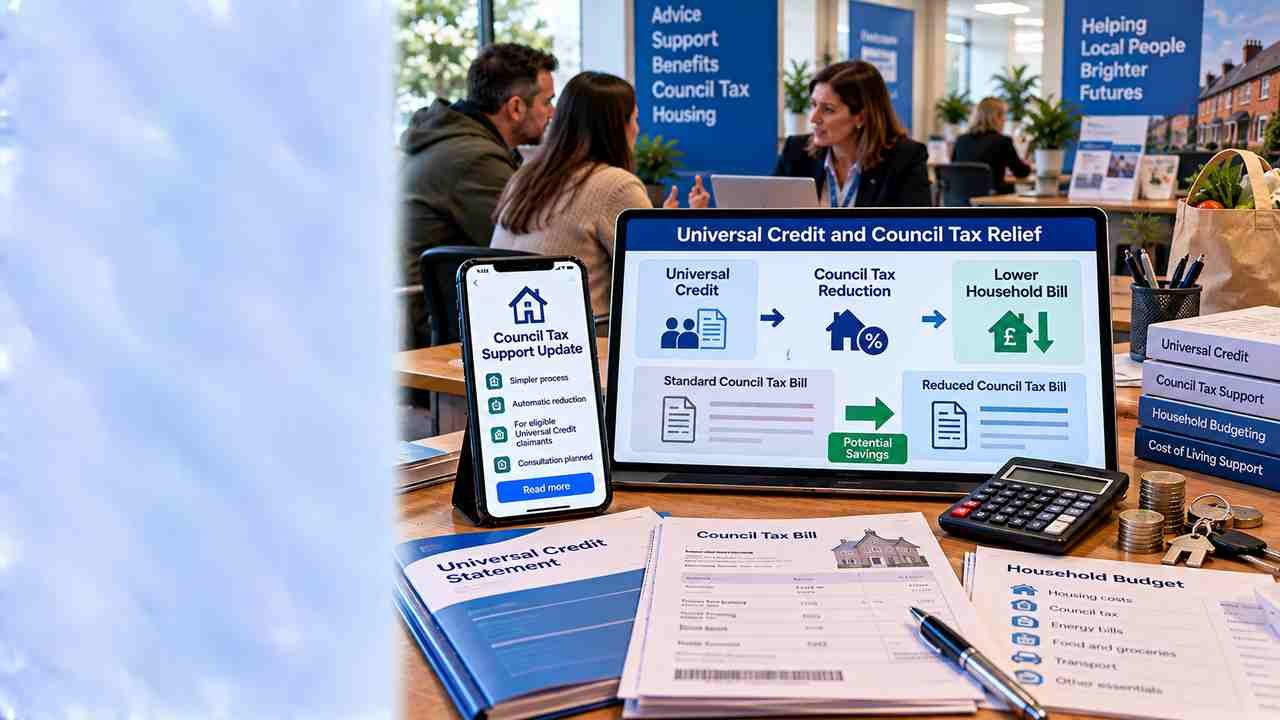
Under the proposed changes, eligible residents receiving Universal Credit would no longer need to complete a separate application form for council tax support. Instead, the reduction could be awarded automatically.
The plans were announced by Reading Borough Council in September 2026 as part of a proposed overhaul of its existing Council Tax Support scheme. If approved, the new arrangements would take effect from April 2027.
However, there is an important point for claimants to understand. The proposal relates to Reading, not every council in the UK. Council Tax Reduction schemes differ between local authorities, meaning the support available depends partly on where someone lives.
The changes could make a difference to low-income households struggling with rising living costs, but they do not mean every Universal Credit claimant will automatically become exempt from council tax.
Here is what the plans involve, who could benefit and what people should do if they are currently paying council tax while receiving Universal Credit.
Why Could Universal Credit Claimants Get Automatic Council Tax Support?
Universal Credit helps eligible households with living costs, but it does not normally include a payment specifically for council tax.
People who are responsible for a council tax bill may need to apply separately to their local authority for Council Tax Reduction.
The amount of help available depends on the local scheme and the household’s circumstances, including income and who lives in the property.
Reading Borough Council says its existing system has become increasingly difficult to manage because many working-age households have moved from older benefits to Universal Credit.
Universal Credit payments can change when a claimant’s earnings or circumstances change. Under a system that recalculates council tax support frequently, those changes can lead to revised council tax bills being issued repeatedly.
This can make it harder for households to understand exactly how much they owe and plan their monthly budgets.
The council wants to replace its current approach with a simpler income-banded system.
Under the proposal, eligible Universal Credit claimants would have their council tax reduction awarded automatically, removing the need to complete a separate application form.
For households already dealing with benefit applications, rent and everyday expenses, reducing the paperwork could make it easier to access support.
Which Council Has Announced the Plans?
The proposals come from Reading Borough Council in Berkshire.
The council announced the proposed changes on 10 September 2026. Its plans included simplifying the local scheme, using household income bands and automatically awarding council tax reductions to eligible Universal Credit recipients.
The proposed implementation date is April 2027, subject to the required approval process.
This distinction matters because council tax support is administered locally.
The Department for Work and Pensions is responsible for Universal Credit, but it does not control every local authority’s Council Tax Reduction scheme. The government has confirmed that local councils are responsible for administering working-age Council Tax Reduction.
As a result, people living in other parts of England, Wales or Scotland should not assume that Reading’s proposed arrangements will automatically apply to them.
They need to check the rules operated by their own local authority or the relevant devolved administration.
Who Could Benefit From the New Scheme?
The proposed changes are aimed at residents who qualify for Council Tax Reduction under Reading’s local scheme.
Universal Credit claimants on low incomes are among the people the council wants to help by making the process simpler.
Potentially affected households could include:
- Single adults receiving Universal Credit.
- Couples whose household income is low enough to qualify.
- Families receiving Universal Credit and responsible for council tax.
- Working households whose Universal Credit entitlement changes when their earnings fluctuate.
- People who currently have to deal with repeated changes to their council tax bills.
However, receiving Universal Credit does not automatically mean someone qualifies for a full council tax reduction.
Eligibility and the amount of support depend on the local scheme and the claimant’s individual circumstances.
The proposed income-banded system is intended to make the calculation easier to understand, but the final rules will determine which households qualify and how much they receive.
Reading Borough Council has said it expects most existing Council Tax Support recipients to receive a similar level of reduction under the proposed system. It also anticipates that a smaller number of residents could receive either more or less support.
That means some households could benefit from the simpler arrangements without necessarily receiving a larger reduction.
Will Universal Credit Claimants Pay No Council Tax?
Not necessarily.
The headline refers to people potentially being spared council tax bills, but the proposed scheme is about Council Tax Reduction rather than a blanket exemption for everyone receiving Universal Credit.
A reduction lowers the amount a household has to pay. Depending on the scheme and the claimant’s circumstances, it may cover some or all of the bill.
For example, a household that qualifies for a substantial reduction could see its council tax liability fall considerably.
Another household with a different income or living arrangement might qualify for a smaller reduction and still need to pay the remaining balance.
The final outcome depends on the rules adopted by the council and the details of each claim.
People should therefore avoid assuming that being on Universal Credit automatically means their council tax bill will disappear.
The government also confirms that Universal Credit does not itself include help with council tax. Claimants who are responsible for the bill may need to obtain that help through their local council.
What Does an Income-Banded Council Tax Scheme Mean?
An income-banded scheme groups households into categories based on their income.
Instead of recalculating support in exactly the same way every time a claimant’s income changes, a council can use income bands to determine the level of reduction.
The precise bands, income thresholds and reductions depend on the scheme adopted by the local authority.
Reading Borough Council says its proposed approach is intended to make the system easier to understand and reduce the number of revised bills issued when household income changes.
This could help households whose earnings vary from month to month.
For example, someone working variable hours might receive different wages across several assessment periods. Under a system that frequently recalculates council tax support, those changes can lead to repeated adjustments to the amount payable.
An income-banded approach may make the process more predictable, although the precise effect depends on the final rules.
It is important to remember that an income band does not guarantee the same result for every household. Council tax liability, household circumstances and the details of the local scheme still matter.
What Happens to People Who Could Receive Less Support?
The proposed changes are not expected to benefit every household equally.
Reading Borough Council has acknowledged that a smaller number of residents could receive a lower level of Council Tax Reduction under the new arrangements.
The council says residents negatively affected would be contacted and invited to seek additional support. It has also indicated that help with maximising income, debt advice and possible assistance through its Crisis and Resilience Fund could be considered where appropriate.
This is an important consideration for households already struggling with essential bills.
A simpler system may reduce paperwork, but a change in the calculation method can still affect the amount a particular household has to pay.
Residents should read any notification from the council carefully and check how the proposed scheme would affect their circumstances.
If a household is concerned about its ability to pay council tax, it should contact the local authority rather than wait until arrears accumulate.
When Could the New Council Tax Support Rules Start?
Reading Borough Council announced the proposal in September 2026.
The council said the proposed changes would be subject to consideration by its Policy Committee and a public consultation.
The consultation was scheduled to run from 17 September to 19 November 2026, giving residents an opportunity to comment before a final decision. The proposed start date for the new scheme is April 2027.
This means the proposed arrangements should not be treated as an immediate change to every claimant’s council tax bill.
Until the new scheme is approved and implemented, residents should continue to follow the existing arrangements and pay any amounts currently due unless their council tells them otherwise.
Claimants should also check future council correspondence for details of any changes to their award.
What Should You Do If You Receive Universal Credit?
If you receive Universal Credit and are responsible for council tax, it is worth checking whether you already qualify for Council Tax Reduction.
You do not need to wait for a new scheme to be introduced before asking your council about existing support.
Here are some practical steps to consider.
1. Contact your local council
Ask whether you qualify for Council Tax Reduction under the current local scheme.
2. Check whether you need to make a separate application
Universal Credit does not automatically include council tax support. Your council can explain how to apply and what evidence it requires.
3. Provide accurate information
Your council may need details about your income, household circumstances and council tax liability.
4. Review your council tax bill
Check whether the reduction has been applied correctly and whether the amount remaining is accurate.
5. Ask for help if you are struggling to pay
If you cannot afford your bill, contact your council as early as possible. It may be able to explain available support or discuss your payment arrangements.
These steps apply to claimants generally and do not depend on whether Reading’s proposed changes are eventually approved.
Do the Plans Apply Across the UK?
No. The announcement concerns Reading Borough Council’s local Council Tax Support scheme.
Council Tax Reduction is administered locally in England, and different councils can operate different schemes for working-age residents. The government has encouraged councils to consider how their schemes interact with changes to Universal Credit, but local authorities remain responsible for their own arrangements.
That means residents in other towns and cities should not assume they will receive the same automatic reduction.
Some councils already operate income-banded systems, while others use different methods to calculate entitlement.
People in Scotland and Wales should check the arrangements applicable where they live.
The most reliable way to find out what help is available is to contact the council responsible for the property.
Why Is Council Tax Support Important for Low-Income Households?
Council tax can be a significant expense for households living on a limited income.
Even when someone receives Universal Credit, they may still need to budget for council tax alongside rent, food, energy bills, travel and other essential costs.
Council Tax Reduction can help eligible households manage that expense.
Research published by the Institute for Fiscal Studies in March 2026 highlighted the importance of local council tax support for low-income households. It also noted that differences between local schemes can mean similar households receive different levels of help depending on where they live.
A simpler application process could help eligible residents access support more easily.
However, administrative changes alone do not guarantee that every household will pay less. The generosity of the scheme, the income rules and each household’s circumstances all influence the final result.
What Happens Next?
The next step is for Reading Borough Council to consider residents’ feedback and determine the final details of its proposed Council Tax Support scheme.
If approved, the new arrangements are intended to begin in April 2027.
The main proposed change is that eligible Universal Credit claimants would receive their council tax reduction automatically, without having to complete a separate application form. The council also wants to make calculations simpler and reduce the number of revised bills issued when income changes.
Residents should follow official council announcements for confirmation of the final rules and implementation date.
People living elsewhere should check their own local scheme rather than assume that the Reading proposal applies nationally.
The Key Points for Universal Credit Claimants
Thousands of low-income households could find it easier to access council tax support if Reading Borough Council’s proposed changes are approved.
The plans would introduce a simpler income-banded system and automatically award Council Tax Reduction to eligible Universal Credit claimants.
However, this is a local proposal, not a new UK-wide rule making council tax free for everyone receiving Universal Credit.
The proposed start date is April 2027, and the final arrangements depend on the council’s approval process.
For now, people receiving Universal Credit should check their existing entitlement, contact their local council if they need help and read any correspondence explaining changes to their council tax bill.