





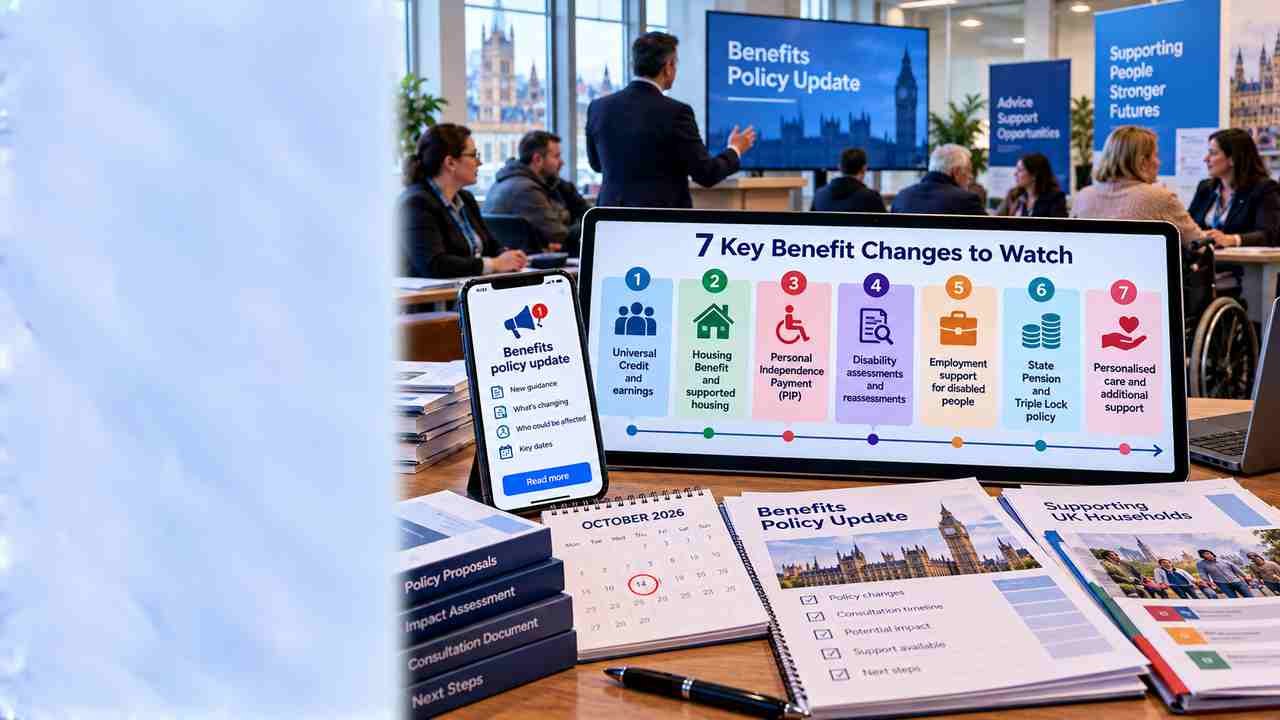
UK pensioners, disabled people and families receiving benefits have several changes to keep an eye on following Prime Minister Andy Burnham’s latest announcements on pensions, social care and the cost of living.
The government’s plans include a proposed adjustment to the State Pension Triple Lock from 2030, alongside the creation of a National Care Service intended to provide free personal care for older people. Meanwhile, changes to Universal Credit, disability benefits and annual payment rates are also affecting people who rely on financial support.
However, not every development is a new announcement from the Prime Minister. Some measures are already in force, while others remain future plans or depend on further decisions.
For households managing a limited budget, understanding the difference is important. A change to State Pension increases could affect retirement income over time, while Universal Credit rules and disability-benefit assessments may affect working-age claimants.
Here are seven developments to understand, who could be affected and what people should check now.
1. State Pension Triple Lock Could Change From 2030
One of the most significant announcements concerns the future of the State Pension Triple Lock.
Under the existing system, the State Pension increases each April by whichever is highest out of average earnings growth, inflation or 2.5%.
The government has announced that the current Triple Lock will remain in place until April 2030. After that, the mechanism is expected to be adjusted so that the State Pension rises by at least inflation or 2.5% each year, with a new link designed to help it keep pace with earnings over time.
The government says savings from the adjusted system would help fund a new National Care Service.
Who could be affected?
The proposal matters to people already receiving the State Pension and those who expect to retire in the coming years.
However, the precise long-term effect will depend on how the revised arrangement works and how earnings, inflation and other economic factors change.
Pensioners should not assume their State Pension will stop increasing in 2030. The announced plan is for annual increases to continue under an adjusted formula.
The important distinction is that the government has outlined a future change to the mechanism, not an immediate cut to existing State Pension payments.
Anyone planning for retirement should keep an eye on further official details rather than relying on predictions about future pension amounts.
2. A New National Care Service Is Planned
The government has also announced plans to establish a National Care Service in the next Parliament.
The proposed service would provide free personal care for older people based on their needs rather than their ability to pay.
The aim is to change how personal care is provided and funded, potentially reducing the financial pressure faced by older people who need help with everyday activities. The government has said Baroness Casey will recommend how and when the service should be built up.
Who could benefit?
Older people who need help with activities such as washing, dressing and other personal-care tasks could be among those affected.
Families who currently contribute towards a relative’s care costs may also want to follow the proposals.
However, the announcement does not mean that all social care is free immediately. The service is planned for the next Parliament, and further details about eligibility, delivery and funding are still important.
People currently receiving care should continue to follow the arrangements that apply to them. They should not assume that existing care charges have automatically ended.
3. Universal Credit’s Two-Child Limit Has Been Removed
Another important change for benefit claimants is the removal of the Universal Credit two-child limit.
The Universal Credit (Removal of Two Child Limit) Act 2026 provides for the restriction to be removed for assessment periods beginning on or after 6 April 2026.
Previously, the two-child limit generally restricted the child element of Universal Credit for a third or subsequent child, subject to exceptions.
With the restriction removed, eligible families can receive the child element for additional children under the applicable rules.
Who could be affected?
Families claiming Universal Credit who have three or more children may benefit.
The actual change to a household’s award depends on its circumstances, including the children included in the claim and the other rules used to calculate Universal Credit.
Removing the limit does not mean every family will receive the same amount. Universal Credit can still be affected by earnings, other income, housing costs, deductions and other elements of the calculation.
Families should check their Universal Credit statements to understand how the change affects their award.
This is an implemented legislative change, rather than a new measure announced as part of Burnham’s pension and social-care plans.
4. PIP Review Periods Have Been Extended for Some Claimants
Personal Independence Payment, commonly known as PIP, provides support for eligible people whose long-term health conditions or disabilities affect daily living or mobility.
The DWP has extended the recommended review period for current PIP awards to introduce a minimum three-year review period under the relevant process.
The department confirmed that the process began on 16 June 2026 and that the extension exercise has been completed. The change also generated notifications relating to other affected benefits, including Carer’s Allowance.
Who could be affected?
Some existing PIP claimants whose awards were included in the review-period exercise could be affected.
A longer review period may mean a claimant’s next review is scheduled further into the future than it would otherwise have been.
However, this should not be interpreted as a guarantee that every PIP award will last for at least three years in all circumstances or that every claimant’s award has changed.
Claimants should read any DWP letter carefully and check their own award details.
The change concerns recommended review periods. It does not automatically increase PIP payment rates or guarantee that a future award will be renewed.
5. Benefit and Pension Rates Increased for 2026/27
Annual benefit uprating is another important development for households receiving financial support.
The official 2026/27 benefit and pension rates include increases to several payments, including the State Pension, Pension Credit, Personal Independence Payment and Universal Credit.
For example, the full new State Pension rate for 2026/27 is £241.30 a week. The Pension Credit standard minimum guarantee is £238 a week for a single person and £363.25 a week for a couple.
The standard and enhanced rates for PIP have also increased. The daily living component is £76.70 a week at the standard rate and £114.60 at the enhanced rate. The mobility component is £30.30 at the standard rate and £80 at the enhanced rate.
Who could be affected?
People already receiving these benefits may see their payments change according to the rates and rules that apply to their award.
The impact will vary. Someone receiving the full new State Pension will have a different payment from someone receiving a partial pension. Pension Credit and PIP awards also depend on individual eligibility.
Annual uprating should not be confused with a separate bonus payment. The new rates are the amounts used for the relevant benefit calculations during the 2026/27 financial year.
Claimants should check their payment statements and official benefit guidance if the amount they receive appears different from what they expected.
6. Universal Credit and Work-Related Support Rules Still Matter
Universal Credit is a means-tested benefit that helps eligible people with living costs. The amount paid depends on household circumstances, earnings and the elements included in the award.
For 2026/27, the standard allowance is £424.90 a month for a single claimant aged 25 or over. For joint claimants where one or both are aged 25 or over, the standard allowance is £666.97 a month.
These are standard allowance figures, not the maximum total Universal Credit a household can receive. Eligible claimants may receive additional amounts for children, housing costs, caring responsibilities or other circumstances.
The amount can also be reduced by earnings and other deductions under the applicable rules.
Who could be affected?
People who claim Universal Credit, including working households, unemployed people and some people with health conditions, should understand how their award is calculated.
A change in wages, rent, household circumstances or eligibility for a particular element can affect the amount paid.
People with health conditions should also check the rules relevant to their work capability assessment and any additional amounts that may apply to their circumstances.
This is an ongoing part of the benefits system rather than a single new policy announcement from Andy Burnham. The rules can still have a significant effect on what individual households receive.
Claimants should review their online statements and report relevant changes in circumstances through the appropriate official process.
7. Disability Benefits and Eligibility Decisions Remain Important
PIP and other disability-related benefits remain an important source of support for eligible people with long-term health conditions or disabilities.
PIP is assessed according to how a person’s condition affects specific daily living and mobility activities. A diagnosis alone does not guarantee entitlement.
For example, someone with a back condition may qualify if their difficulties meet the relevant criteria, while another person with the same diagnosis may not.
The assessment considers practical difficulties, such as preparing food, washing, dressing, managing treatment and moving around.
PIP has separate daily living and mobility components, and a claimant may qualify for one or both depending on the assessment outcome. The 2026/27 rates are set out in the government’s official benefit-rate guidance.
Who could be affected?
People making new claims, existing claimants approaching a review and people whose health circumstances have changed should check the relevant rules.
Claimants should provide accurate information about how their condition affects everyday life, how often they experience difficulties and what help they need.
Medical evidence may support a claim, but it is important to explain the practical effects of the condition as well.
People who disagree with a decision should read the decision letter and check the official guidance on challenging benefit decisions.
What Should Pensioners and Claimants Do Now?
With several developments taking place at different times, the most useful step is to check which rules apply to your own circumstances.
Pensioners should review their State Pension information and follow official announcements about the planned Triple Lock adjustment from 2030.
People who need personal care should continue to check their current local-authority or care arrangements while the National Care Service plans are developed.
Families claiming Universal Credit should check whether the removal of the two-child limit has been reflected in their award.
PIP claimants should read DWP correspondence about their review dates and avoid assuming that an extension to a review period automatically changes the amount they receive.
Anyone receiving Universal Credit or another means-tested benefit should report relevant changes in circumstances and check their statements regularly.
For official information, use the government’s benefit and pension rate guidance and the relevant pages on GOV.UK.
Are All Seven Changes Already in Force?
No. The seven developments are at different stages.
The removal of the Universal Credit two-child limit took effect for relevant assessment periods beginning on or after 6 April 2026. The 2026/27 benefit rates are also in effect.
The extension exercise for certain PIP review periods has been completed, although individual claimants should check their award details.
By contrast, the National Care Service is planned for the next Parliament, and the adjustment to the State Pension Triple Lock is scheduled for 2030.
The distinction matters because a government announcement about a future policy does not automatically change someone’s payment today.
People should rely on confirmed implementation dates and their own award information rather than assuming that every announced change has already taken effect.
The Key Points for UK Pensioners and Benefit Claimants
Andy Burnham’s recent announcements have put the future of the State Pension and social care in focus. The government plans to maintain the current Triple Lock until April 2030 before adjusting it, and it intends to establish a National Care Service in the next Parliament.
At the same time, other benefit developments are already affecting families and claimants. These include the removal of the Universal Credit two-child limit, changes to certain PIP review periods and the annual uprating of benefit and pension rates.
The seven developments do not all come from one announcement, and they will not affect every household in the same way.
The most important step is to identify which change applies to your circumstances, check the relevant dates and use official guidance to understand what it means for your payments or future care needs.