




People living with long-term back problems could be eligible for Personal Independence Payment (PIP) if their condition makes everyday activities or getting around difficult. Conditions such as sciatica, spinal stenosis and chronic back pain can affect walking, standing, washing, dressing and preparing meals, particularly when symptoms are severe or persistent.
PIP is a disability benefit administered by the Department for Work and Pensions (DWP). It helps eligible people with some of the additional costs associated with a long-term health condition or disability.
Under the 2026/27 payment rates, eligible claimants can receive up to £194.60 a week if they qualify for both the enhanced daily living and enhanced mobility components. That is equivalent to £778.40 every four weeks.
However, having a back condition does not automatically qualify someone for PIP. The DWP assesses how the condition affects a person’s ability to complete specific daily activities and mobility tasks, rather than awarding payments simply because a diagnosis appears on a list.
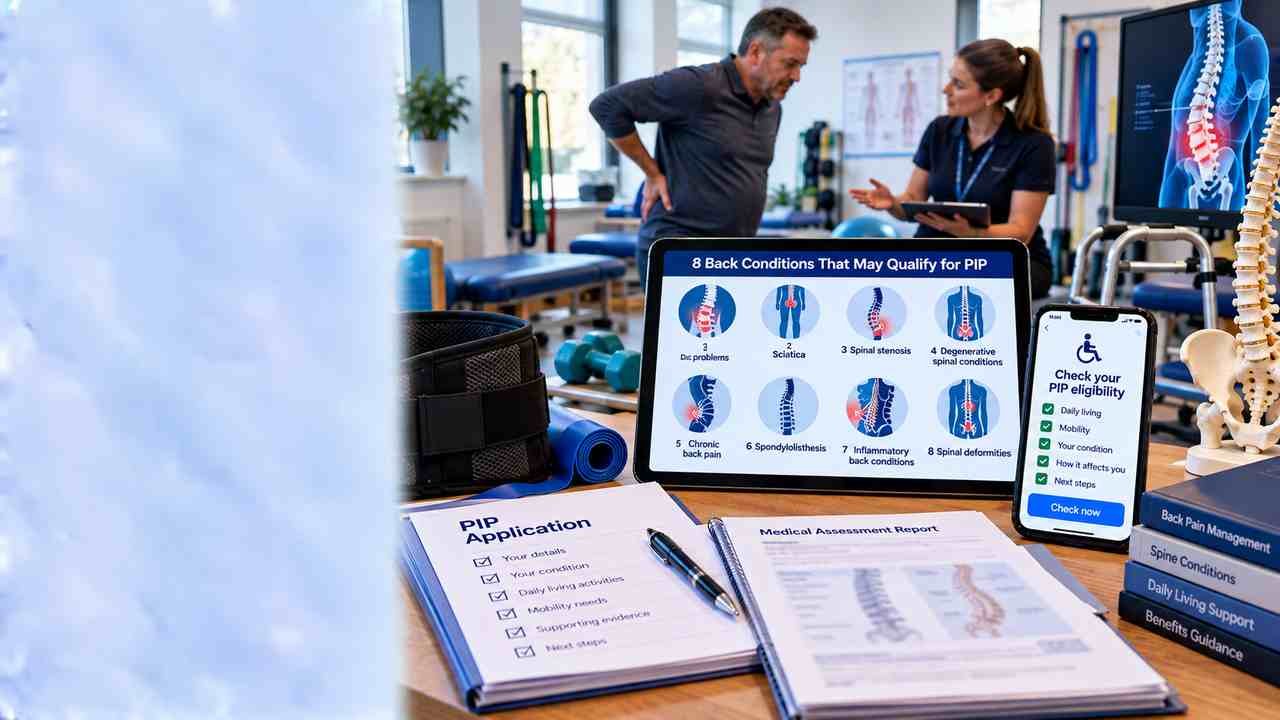
Here are eight back conditions that may be relevant to a PIP claim, the symptoms that could affect eligibility and the rules people should understand before applying.
1. Sciatica
Sciatica occurs when the sciatic nerve becomes irritated or compressed, causing pain that travels from the lower back into the buttock and down one leg. Some people also experience tingling, numbness or weakness.
Symptoms can range from mild discomfort to severe pain that makes standing, walking or sitting difficult.
For someone with persistent sciatica, everyday activities may become more challenging. For example, bending to put on socks or shoes could cause significant pain. Walking to the shops might require frequent breaks, while preparing a meal could become difficult if standing at a kitchen counter aggravates symptoms.
Someone with sciatica could qualify for PIP if the resulting difficulties meet the benefit’s assessment criteria.
A diagnosis alone is not enough. The claimant would need to explain the practical effects of their symptoms, how frequently difficulties occur and whether they need help or an aid to complete relevant activities.
2. Herniated or Slipped Disc
A herniated disc, commonly called a slipped disc, occurs when material inside a spinal disc pushes through its outer layer. Depending on its location and severity, it can irritate nearby nerves and cause back pain or pain that travels into an arm or leg.
Some people recover with treatment, while others experience persistent symptoms or complications.
Severe symptoms may affect a person’s ability to bend, lift, stand for long periods or move safely. If nerve compression causes weakness or other complications, walking and other everyday activities may also become more difficult.
For PIP purposes, the key issue is not whether an MRI scan confirms a slipped disc. The assessment focuses on the difficulties the person experiences and whether they meet the relevant activity criteria.
Medical evidence can help support a claim, but the claimant should also provide clear examples of how their symptoms affect their daily routine.
3. Spinal Stenosis
Spinal stenosis occurs when spaces within the spine become narrower, potentially putting pressure on the spinal cord or nerves.
Symptoms depend on the location and severity of the narrowing. They can include back pain, numbness, tingling, weakness and difficulties walking.
Some people find that standing or walking for a period makes their symptoms worse. They may need to stop, sit down or lean forward before continuing.
These difficulties could be relevant to the PIP mobility assessment, particularly where a person’s ability to walk is significantly restricted.
However, there is no single walking distance that automatically guarantees an award. The DWP considers the applicable mobility criteria and how the person can move around reliably in their everyday life.
A claimant should describe how far they can normally walk, what happens when they try to continue, how long they need to recover and whether they experience different levels of difficulty on different days.
4. Degenerative Disc Disease
Degenerative disc disease describes changes in the spinal discs that can occur over time. These changes may be associated with back pain and reduced movement, although not everyone with disc degeneration experiences significant symptoms.
For people who do experience persistent pain, activities such as bending, lifting, standing and sitting for extended periods may become difficult.
Some may struggle to dress independently, wash their lower body or prepare food without taking breaks. Others may find that pain and stiffness make it difficult to leave home or complete journeys.
PIP eligibility depends on the actual impact of the condition.
Having degenerative changes visible on an X-ray or MRI does not automatically establish entitlement. The claimant needs to explain how the condition affects the activities considered by the assessment and provide relevant supporting evidence where available.
5. Ankylosing Spondylitis
Ankylosing spondylitis is a type of inflammatory arthritis that mainly affects the spine. It can cause long-term back pain, stiffness and reduced spinal movement.
Symptoms often vary, and some people experience periods when pain and stiffness become considerably worse.
Depending on the severity of the condition, a person may struggle to bend, put on clothes, wash their feet, stand for long periods or walk comfortably.
The condition can also affect sleep and energy levels, which may contribute to difficulties managing everyday activities.
Someone with ankylosing spondylitis could be eligible for PIP if their functional difficulties meet the relevant criteria.
When applying, it can be helpful to explain the effects of morning stiffness, painful movement, fatigue and symptom flare-ups. The important point is to describe what happens in practice rather than relying on the diagnosis alone.
6. Scoliosis
Scoliosis is a condition in which the spine curves sideways. Its effects vary depending on the degree of curvature and whether the person experiences pain, restricted movement or other complications.
Some people have few symptoms and can manage everyday activities without significant difficulty. Others experience persistent discomfort, reduced mobility or difficulties maintaining certain positions.
Where symptoms are substantial, they may affect dressing, washing, standing, walking or other daily activities.
A person with scoliosis could qualify for PIP if their difficulties satisfy the assessment rules.
The presence of a spinal curve does not automatically lead to an award. The DWP considers the individual’s functional limitations, including whether activities can be completed safely, repeatedly, to an acceptable standard and within a reasonable time.
7. Chronic Lower Back Pain
Chronic lower back pain is persistent or recurring pain affecting the lower part of the back. It can have several causes, including musculoskeletal problems, degenerative changes and other medical conditions.
Some people experience manageable discomfort, while others have pain that substantially restricts movement and daily activities.
For example, someone with severe chronic back pain may struggle to prepare food because they cannot remain standing for long. They may need help getting dressed, take much longer to wash or find it difficult to walk to nearby shops.
The effect on daily living and mobility is what matters for PIP eligibility.
People whose pain fluctuates should explain how often it becomes severe, what they can manage on better and worse days and whether they can repeat activities when needed.
Keeping an accurate symptom diary may help someone describe their difficulties when completing the claim form.
8. Lumbar Radiculopathy
Lumbar radiculopathy occurs when a nerve root in the lower spine is irritated or compressed. It can cause pain, tingling, numbness or weakness that travels into the leg.
The condition may be associated with a herniated disc, spinal narrowing or other spinal problems.
When symptoms are severe, a person may struggle to walk safely, climb steps, stand for long periods or complete tasks that require bending and movement.
If nerve-related weakness affects mobility or everyday activities, those difficulties could be relevant to a PIP assessment.
Claimants should explain how their symptoms affect them in practical situations. For example, they could describe whether leg weakness makes walking difficult, whether pain forces them to stop frequently and whether they need support to complete personal care.
As with the other conditions, the diagnosis itself does not guarantee payment.
How Much PIP Could You Receive in 2026/27?
PIP has two separate components: daily living and mobility. A claimant can qualify for one component or both, depending on the assessment.
The 2026/27 weekly rates are:
| PIP component | Standard rate | Enhanced rate |
|---|---|---|
| Daily living | £76.70 | £114.60 |
| Mobility | £30.30 | £80.00 |
A person awarded both enhanced components could receive £194.60 a week, or £778.40 over four weeks.
Someone who qualifies for only one component will receive the applicable rate for that component. The final amount depends on the assessment outcome, not the name of the back condition.
PIP is tax-free, and entitlement is not affected by income or savings. People can also receive PIP while working, provided they meet the eligibility requirements.
What Does the DWP Assess?
The DWP considers how a person’s condition affects specific daily living and mobility activities.
The daily living component covers activities including:
- Preparing food.
- Eating and drinking.
- Managing medication or treatment.
- Washing and bathing.
- Using the toilet.
- Dressing and undressing.
- Communicating and understanding information.
- Reading.
- Mixing with other people.
- Making budgeting decisions.
The mobility component considers planning and following journeys and physically moving around.
For people with back problems, the physical moving-around assessment may be particularly relevant. However, difficulties with daily living can also matter.
The assessment considers whether someone can complete relevant activities safely, to an acceptable standard, repeatedly and within a reasonable time.
For example, being able to walk a short distance once does not necessarily mean someone can repeat that distance as often as reasonably required throughout the day.
Claimants should explain what happens when they attempt an activity, including pain, weakness, the need for assistance and the time needed to recover.
The DWP’s decision is based on the applicable assessment criteria and the evidence about the individual’s circumstances.
Who Can Make a PIP Claim?
In general, a person may qualify for a new PIP claim if they:
- Are aged 16 or over.
- Have a long-term physical or mental health condition or disability.
- Experience difficulties with daily living or mobility activities.
- Expect those difficulties to have lasted, or to last, for at least 12 months from when they started.
New claims are usually for people who have not reached State Pension age, although exceptions apply to some people who have previously received PIP or Adult Disability Payment.
People living in Scotland generally apply for Adult Disability Payment instead of PIP.
People who have reached State Pension age and want to make a new disability-benefit claim may need to consider Attendance Allowance, depending on their circumstances.
Anyone unsure about their eligibility should check the official guidance before applying.
What Evidence Can Help With a PIP Claim?
A claim should explain how the condition affects everyday life, rather than simply listing medical diagnoses.
Evidence that may help includes:
- Letters from a GP, consultant or physiotherapist.
- Hospital or specialist reports.
- Relevant scan or test results.
- Medication and treatment information.
- Details of walking difficulties and pain.
- Examples of tasks that require assistance or an aid.
- Information about symptom flare-ups and recovery time.
- Statements describing the support provided by a family member or carer.
For instance, a claimant with spinal stenosis could explain how far they can walk before needing to stop and how long they must rest before continuing.
Someone with a herniated disc could describe the difficulty they experience when dressing, bathing or preparing meals.
Evidence should be accurate and relevant. A medical diagnosis may support the claim, but it is important to explain the real-life consequences of the condition.
Where Can You Check the Official Rules?
The government provides guidance on PIP eligibility, payment rates and the activities considered during assessment.
You can check:
These official pages explain the rules and can help you decide whether making a claim may be appropriate.
The Key Point for People With Back Conditions
People with sciatica, slipped discs, spinal stenosis, degenerative disc disease, ankylosing spondylitis, scoliosis, chronic lower back pain or lumbar radiculopathy may be eligible for PIP if their symptoms cause sufficient difficulties with daily living or mobility.
However, there is no automatic PIP award for these eight conditions. The DWP assesses each person’s circumstances against the relevant criteria.
Under the 2026/27 rates, the maximum combination of the two enhanced components is £778.40 every four weeks.
If a back condition affects your ability to walk, wash, dress, prepare meals or manage other everyday activities, check the official eligibility rules and consider gathering evidence about the difficulties you experience.
The most useful thing to explain in a claim is not just what your condition is, but how it affects your life and what help you need.