




People living with certain blood conditions could qualify for Personal Independence Payment (PIP) if their symptoms make everyday activities or getting around difficult. The Department for Work and Pensions (DWP) records a range of blood-related conditions among people claiming the benefit, including different forms of anaemia, sickle cell disease and bleeding disorders.
A list of 18 blood-condition categories has attracted attention because people with these conditions may be eligible for financial support worth hundreds of pounds every four weeks. However, there is an important distinction: having a condition on the list does not automatically qualify someone for PIP.
The benefit is assessed according to how a person’s health affects their daily life, rather than the name of their diagnosis alone. Someone who experiences severe fatigue, pain, breathlessness or difficulties managing treatment may face different assessment outcomes from another person with the same condition.
Under the 2026/27 rates, someone receiving both the enhanced daily living and enhanced mobility components could receive £778.40 every four weeks. Not everyone will qualify for both components, and some claimants may receive a lower award or no award.
Here is the full list of 18 blood-condition categories, how PIP eligibility works and what claimants should know before applying.
What Are the 18 Blood Conditions Linked to PIP Claims?
The reported list covers several types of blood disorders, including conditions affecting red blood cells, haemoglobin, clotting and platelets.
The 18 categories are:
1. Aplastic anaemia
Aplastic anaemia occurs when the bone marrow does not produce enough new blood cells. Depending on its severity, it can cause tiredness, weakness, infections and an increased risk of bleeding.
2. Vitamin B12, pernicious or folate-deficiency anaemia
These forms of anaemia can develop when the body does not have enough vitamin B12 or folate to produce healthy red blood cells. Symptoms may include fatigue, weakness and breathlessness. Vitamin B12 deficiency can also cause neurological problems in some people.
3. Iron-deficiency anaemia
Iron-deficiency anaemia develops when the body lacks enough iron to produce healthy red blood cells. Symptoms can include tiredness, a lack of energy, shortness of breath and heart palpitations.
4. Other anaemia or anaemia of an unspecified type
This category covers other forms of anaemia or cases where the precise type is not recorded in the relevant data.
5. Sickle cell anaemia
Sickle cell disease is an inherited condition that affects haemoglobin and can cause painful episodes, anaemia and other complications. The frequency and severity of symptoms vary between individuals.
6. Other haemolytic disorders
Haemolytic disorders involve the destruction of red blood cells faster than the body can replace them. The resulting anaemia and associated symptoms can vary according to the underlying condition.
7. Hereditary spherocytosis
Hereditary spherocytosis is an inherited condition affecting the shape and stability of red blood cells. Some people experience anaemia, jaundice or an enlarged spleen, while the severity differs between individuals.
8. Thalassaemia
Thalassaemia is a group of inherited conditions affecting haemoglobin production. More severe forms can cause significant anaemia and may require regular blood transfusions and ongoing specialist care.
9. Glucose-6-phosphate dehydrogenase (G6PD) deficiency
G6PD deficiency is an inherited condition that can cause red blood cells to break down in certain circumstances, including exposure to particular medicines, infections or other triggers.
10. Other metabolic red-cell disorders
This category covers other metabolic conditions affecting red blood cells that do not fall into the more specifically named groups.
11. Polycythaemia
Polycythaemia involves an increased concentration of red blood cells. Depending on the type and severity, it can be associated with symptoms such as headaches, dizziness or other complications.
12. Other clotting disorders
This category includes clotting conditions that are not recorded under a more specific diagnosis. Their effects depend on the disorder and the individual’s medical circumstances.
13. Haemophilia A
Haemophilia A is an inherited bleeding disorder caused by a lack of clotting factor VIII. It can lead to prolonged bleeding, easy bruising and bleeding into joints or muscles.
14. Haemophilia B, also known as Christmas disease
Haemophilia B is another inherited bleeding disorder, caused by a lack of clotting factor IX. Its effects range from mild to severe.
15. Von Willebrand disease
Von Willebrand disease affects a protein involved in blood clotting. Symptoms may include frequent nosebleeds, easy bruising and prolonged bleeding after injuries or procedures.
16. Autoimmune or idiopathic thrombocytopenic purpura (ITP)
ITP is a condition in which the immune system attacks platelets, which help blood clot. A low platelet count can increase the risk of bruising and bleeding.
17. Other platelet disorders
This category includes other platelet-related conditions or cases where the exact type is not recorded in the data.
18. Blood disorders where the type is unknown
This final category covers blood disorders for which the specific diagnosis is not identified in the recorded information.
These are categories reported in coverage of DWP-related data, not a definitive list of conditions that automatically qualify for PIP. Other health conditions may also support a claim if their effects meet the benefit’s assessment criteria.
Does Having One of These Conditions Guarantee PIP?
No. A diagnosis alone does not guarantee an award.
PIP is intended to help with some of the extra costs associated with long-term ill health or disability. The DWP considers how a person’s condition affects their ability to complete specific everyday activities and get around.
For example, two people with iron-deficiency anaemia might experience very different symptoms. One person may manage daily activities without significant difficulty, while another may experience persistent exhaustion and breathlessness that make preparing food, bathing or walking difficult.
The same principle applies to sickle cell disease, haemophilia and other blood disorders.
The assessment focuses on the practical impact of the condition, including whether the person needs assistance, supervision, prompting or an aid to complete relevant activities.
A claimant should therefore explain not only the name of their condition but also how it affects them in real-life situations.
Which Everyday Activities Are Considered?
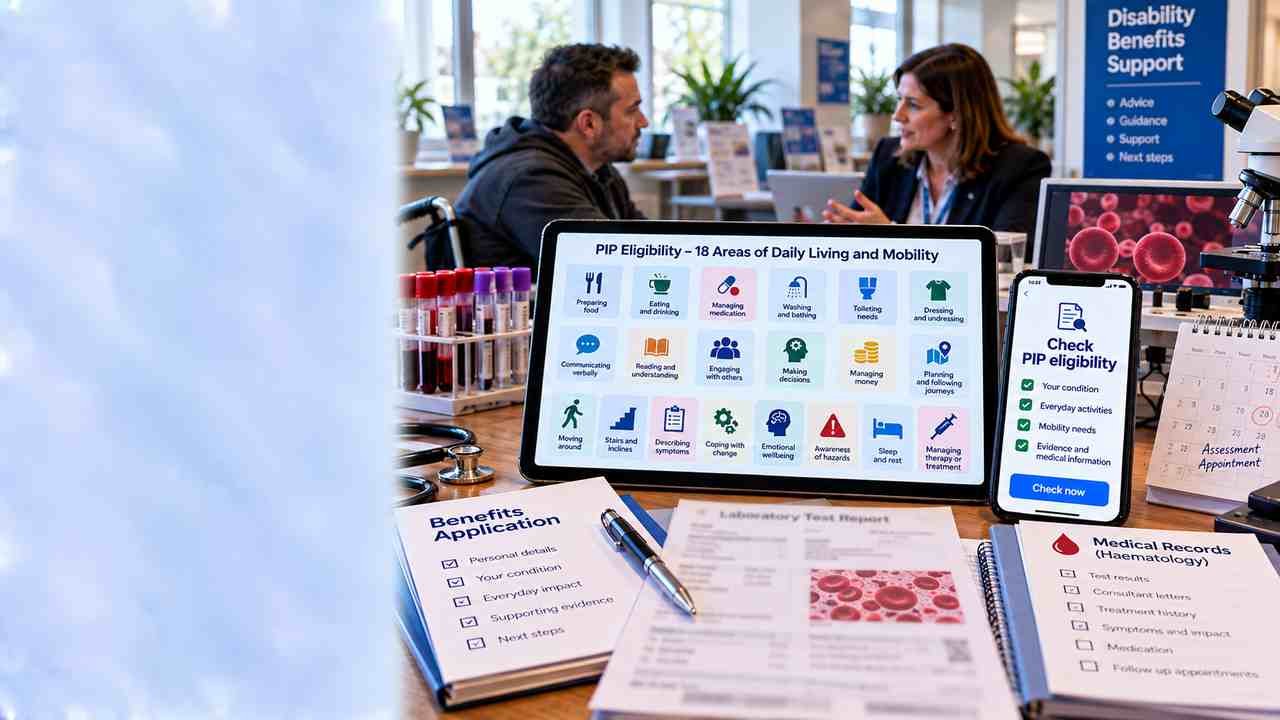
PIP has two components: daily living and mobility. Each is assessed separately.
The daily living component considers difficulties with activities such as:
- Preparing and cooking food.
- Eating and drinking.
- Managing medication and treatment.
- Washing and bathing.
- Using the toilet and managing incontinence.
- Dressing and undressing.
- Communicating and understanding information.
- Reading.
- Mixing with other people.
- Making budgeting decisions.
The mobility component considers difficulties with planning and following journeys and physically moving around.
For someone with a blood disorder, the relevant difficulties will depend on their individual symptoms.
For example, severe fatigue might make it difficult to prepare a meal safely or complete personal care. Joint damage associated with repeated bleeding episodes could affect movement. Complications from a condition or its treatment may also affect how reliably someone can complete daily tasks.
The assessment considers whether activities can be completed safely, to an acceptable standard, repeatedly and within a reasonable time.
A person may be able to perform an activity once but struggle to repeat it when needed. That distinction can be important when explaining the effects of a fluctuating condition.
The DWP’s assessment guidance sets out the activities and criteria used to decide entitlement.
How Much Could Someone Receive From PIP in 2026/27?
The amount awarded depends on the points scored for the daily living and mobility components.
The official 2026/27 weekly rates are:
| PIP component | Standard weekly rate | Enhanced weekly rate |
|---|---|---|
| Daily living | £76.70 | £114.60 |
| Mobility | £30.30 | £80.00 |
A person who qualifies for both enhanced components could receive £194.60 a week, equivalent to £778.40 over four weeks.
Someone receiving the standard daily living component alone would receive £76.70 a week. A claimant awarded the enhanced mobility component alone would receive £80 a week.
Other combinations are possible, depending on the assessment outcome.
These are the rates for 2026/27, not a guaranteed payment for everyone with a blood condition. The award depends on the points established under the relevant assessment criteria.
Is PIP Means-Tested?
No. PIP is not means-tested.
A person’s income or savings do not determine whether they qualify. Being in work does not automatically prevent someone from receiving PIP either.
Instead, the decision is based on the effects of their health condition or disability and whether they meet the relevant assessment requirements.
This is important for people with blood disorders who continue to work but still experience substantial difficulties outside work or need help with daily activities.
PIP is also tax-free. However, the fact that someone has limited income or high medical expenses does not, by itself, establish eligibility. They must still meet the benefit’s conditions.
Who Can Make a New PIP Claim?
In general, a person can make a new PIP claim if they:
- Are aged 16 or over.
- Usually have not reached State Pension age.
- Have a long-term physical or mental health condition or disability.
- Experience difficulties with daily living activities or mobility.
- Expect those difficulties to have lasted, or to last, for at least 12 months from when they began.
There are separate rules for people nearing the end of life.
If you live in Scotland, you generally need to apply for Adult Disability Payment instead of PIP. If you have reached State Pension age and want to make a new disability-benefit claim, Attendance Allowance may be the relevant benefit, depending on your circumstances.
There are exceptions to the usual rules, including for some people who previously received PIP or Adult Disability Payment. Check the official eligibility guidance before applying.
What Evidence Could Help Support a Claim?
People applying for PIP should explain how their condition affects them on ordinary days as well as during flare-ups or periods of more severe symptoms.
Useful evidence may include:
- Medical letters confirming the diagnosis and treatment.
- Information from a GP or specialist.
- Details of prescribed medication and treatment.
- Records of hospital admissions or complications, where relevant.
- Examples of difficulties with cooking, washing, dressing or moving around.
- Information about assistance provided by a family member, friend or carer.
- An explanation of how frequently symptoms affect daily activities.
For example, a person with sickle cell disease could explain how pain episodes affect their ability to prepare meals, wash, dress or leave home. Someone with a bleeding disorder could describe how joint problems or the risk of bleeding affect movement and everyday tasks.
The important point is to describe the actual difficulties, how often they happen and what support is needed.
Medical evidence can help establish the condition, but the claim should also explain its practical consequences. Claimants should provide accurate information and avoid exaggerating or minimising their difficulties.
What If Your Blood Condition Is Not on the List?
You may still be able to qualify.
The 18 categories should not be treated as a complete list of all conditions that can support a PIP claim. The benefit is not restricted to a closed list of diagnoses.
Someone with another blood disorder—or a different long-term health condition—may qualify if its effects meet the relevant daily living or mobility criteria.
Equally, someone with one of the listed conditions may not qualify if their difficulties do not meet the assessment requirements.
If you are unsure, check the official PIP guidance and consider seeking advice from a welfare-rights adviser or Citizens Advice.
Where Can You Check the Official PIP Rules?
The GOV.UK website explains who can claim PIP, the activities considered during assessment and the current payment rates.
You can check the official guidance here:
These sources can help you understand the rules before deciding whether to make a claim.
The Key Points for People With Blood Conditions
People with conditions such as anaemia, sickle cell disease, thalassaemia, haemophilia and other blood disorders may qualify for PIP if their symptoms cause sufficient difficulties with everyday activities or mobility.
The 18 categories provide useful examples of blood conditions recorded in PIP-related data, but they are not an automatic entitlement list.
Under the 2026/27 rates, someone awarded both enhanced components could receive £778.40 every four weeks. Other claimants may receive a lower amount or may not qualify, depending on their assessment.
If you have a blood condition, focus on explaining how it affects your daily life, how frequently you experience difficulties and what help you need. Checking the official criteria and providing relevant evidence can help you understand whether a claim may be appropriate.