





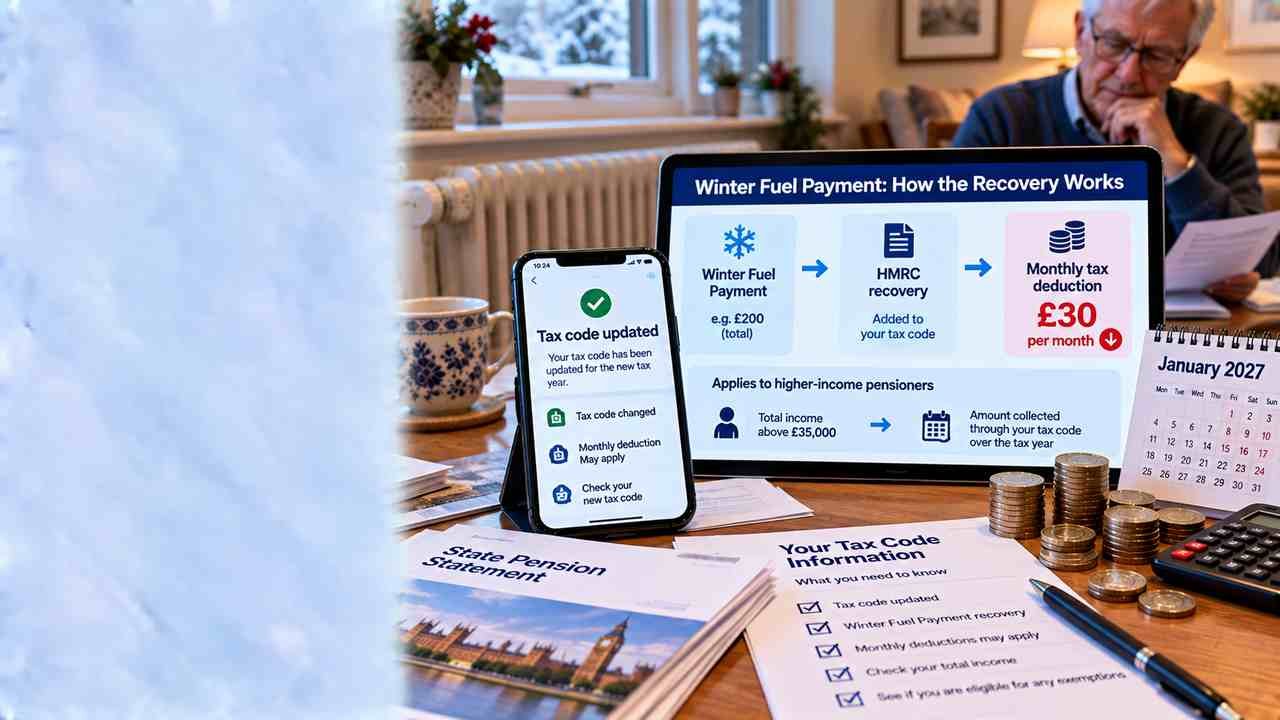
Some UK pensioners could see a noticeable change in their monthly tax deductions from January 2027 as HMRC prepares to recover Winter Fuel Payments through the tax system.
For pensioners whose total annual income is above £35,000, HMRC can recover the full value of a Winter Fuel Payment through PAYE or Self Assessment. The rules mean some people could temporarily pay around £30 to £33 more tax each month when HMRC is collecting two Winter Fuel Payments at the same time.
This does not mean that every person receiving the State Pension will suddenly face a £30 monthly tax charge.
The change affects a specific group of higher-income pensioners who receive Winter Fuel Payment and are subject to the HMRC recovery rules.
Why Could Tax Increase From January 2027?
The reason for the January change is linked to the way HMRC is transitioning to collecting Winter Fuel Payments through the tax system.
GOV.UK explains that if HMRC is already collecting a previous Winter Fuel Payment, a person’s tax code can change in January 2027 to begin collecting the next payment as well.
Where a typical £200 Winter Fuel Payment was received in both years, the combined recovery can temporarily result in approximately £30 to £33 more tax being deducted each month.
This is therefore not a new £30 tax charged to every pensioner.
It is a temporary increase in the monthly deduction for people whose Winter Fuel Payments are being recovered at the same time.
Who Could Be Affected?
The key figure pensioners need to understand is £35,000.
Under the current rules, the Winter Fuel Payment charge applies where an individual’s total income for the tax year is more than £35,000 and they receive a qualifying winter payment.
HMRC’s guidance states that the threshold applies to individual income rather than household income. This means a couple’s incomes are not simply added together for this particular test. One partner could be affected while the other is not.
For example, if one pensioner has total income of £36,000 while their partner has income below the threshold, the higher-income pensioner may be liable for the charge.
It Is Not a £30 State Pension Cut
Pensioners should not confuse the tax adjustment with a reduction in their State Pension.
The State Pension itself is not being reduced by £30 a month under this rule.
Instead, HMRC is recovering the value of the Winter Fuel Payment from people whose income is above the relevant threshold.
The Winter Fuel Payment itself is not treated as ordinary taxable income. Instead, an equivalent Income Tax charge is applied to recover the payment.
This distinction is particularly important because some headlines could otherwise give the impression that HMRC is introducing a new monthly State Pension deduction.
What Happens If Income Is Over £35,000?
If an eligible pensioner’s total income exceeds £35,000, HMRC can recover the full value of the Winter Fuel Payment.
There is no gradual taper where only part of the payment is recovered.
HMRC’s internal guidance gives an example of someone receiving a £200 Winter Fuel Payment with total income of £36,000. The full £200 payment is subject to the Winter Fuel Payment charge.
This means pensioners should pay particular attention to their total income if they are close to the threshold.
What Counts as Total Income?
The £35,000 test is based on an individual’s total income.
This can include income from different sources, rather than simply looking at the amount of State Pension received.
A pensioner’s overall income may include:
- State Pension
- workplace pension
- private pension
- employment income
- taxable savings income
- investment income
- other taxable sources
This is why someone who receives a relatively modest State Pension could still cross the £35,000 threshold if they also have a substantial workplace or private pension.
Why Some Pensioners Could See £30 to £33 More Tax
The temporary increase is linked to the recovery of two payments.
GOV.UK gives the example of HMRC already collecting a 2025 Winter Fuel Payment. In January 2027, the person’s tax code can change to begin collecting the 2026 Winter Fuel Payment as well.
If both payments are £200, the combined amount being recovered means the person could pay approximately £30 to £33 more tax per month.
The exact deduction can vary depending on the individual’s circumstances and tax arrangements.
It is therefore better to describe £30 to £33 as an approximate figure rather than a fixed charge that every affected pensioner will pay.
How Long Will the Higher Deduction Last?
The higher monthly deduction is expected to be temporary.
HMRC says deductions for a typical £200 winter payment are around £17 a month during the 2026/27 tax year.
During 2027/28, deductions can temporarily rise to around £33 a month because HMRC will be recovering payments for both the 2026 and 2027 winter payments.
From the 2028/29 tax year onwards, deductions are expected to return to approximately £17 a month for a typical £200 payment.
The exact timing depends on the individual’s tax circumstances and whether they continue receiving Winter Fuel Payments.
What If You Pay Tax Through PAYE?
Most pensioners who have a PAYE income source will not need to calculate the charge themselves.
HMRC can automatically adjust the person’s tax code to recover the relevant amount.
This could affect someone whose main taxable income comes from a pension or employment.
A change in the tax code can result in less net income being received each month, even though the State Pension or pension entitlement itself has not been reduced.
Pensioners should therefore check their tax code and HMRC correspondence if their monthly income changes.
What If You Complete a Self Assessment Tax Return?
The process is different for people who complete Self Assessment.
GOV.UK says the Winter Fuel Payment must be included in the relevant tax return, with HMRC normally including the amount automatically for online filers.
People should still check their return and make sure the information is correct.
Those who file a paper return may need to enter the relevant amount themselves.
Importantly, nobody needs to register for Self Assessment solely because of the Winter Fuel Payment charge.
Will Everyone Receiving Winter Fuel Payment Pay It Back?
No.
The charge is targeted at pensioners whose total income is above £35,000.
There are also exemptions for people who receive certain means-tested benefits during the relevant qualifying week.
These include benefits such as Pension Credit and Universal Credit, subject to the applicable rules.
This means pensioners should not assume that receiving a Winter Fuel Payment automatically means HMRC will take the money back.
What Are the Current Winter Fuel Payment Amounts?
For winter 2026 to 2027, eligible pensioners can receive between £100 and £300, depending on their age and circumstances.
For example, someone who lives alone or lives with someone who is not eligible can receive £200 or £300 depending on their date of birth.
Other household arrangements can result in different amounts.
This matters because the amount HMRC eventually recovers is linked to the actual Winter Fuel Payment received.
When Will Winter Fuel Payments Be Paid?
Most eligible people are expected to receive their Winter Fuel Payment automatically.
GOV.UK says most payments for winter 2026 to 2027 will be made in November or December 2026.
Eligible people should receive a letter in October or November explaining how much they will receive and which bank account the payment will go into.
The payment normally goes into the same bank account used for State Pension or other benefits.
What Should Pensioners Check Before January?
Anyone who thinks they may be affected should check their estimated total income for the relevant tax year.
It is particularly important for pensioners who receive income from several sources.
Check:
- State Pension income
- workplace pension income
- private pension income
- taxable savings or investments
- employment income
- other taxable income
The key question is whether the individual’s total income is above £35,000.
Pensioners should also keep an eye on HMRC tax-code notices if they already pay tax through PAYE.
Could the £30 Deduction Affect Household Budgets?
For a pensioner already managing a tight monthly budget, an additional £30 or more in tax deductions could make a noticeable difference.
However, it is important to understand that the deduction is not an additional penalty.
It represents the recovery of Winter Fuel Payment amounts that have already been paid to someone who falls within the higher-income rules.
The temporary increase occurs because two winter payments can be recovered at the same time during the transition period.
Pensioners Can Check Their Position
GOV.UK provides information and a calculator to help pensioners assess whether their total income is above the £35,000 threshold.
People who expect their income to exceed the threshold can also consider opting out of future Winter Fuel Payments.
The opt-out process differs depending on where someone lives in the UK.
Before making any decision, pensioners should check their individual circumstances and the latest official guidance.
The Bottom Line
The £30-a-month HMRC tax warning from January 2027 does not apply to every State Pensioner.
It is mainly relevant to pensioners with total income above £35,000 who receive Winter Fuel Payments and have those payments recovered through the tax system.
For people who are having two typical £200 Winter Fuel Payments recovered at the same time, HMRC says the monthly deduction could temporarily be around £30 to £33.
The deduction is expected to be temporary, with the typical monthly recovery returning to around £17 from the 2028/29 tax year under the current arrangements.
Most importantly, this is not a £30 cut to the State Pension.
It is a tax-system recovery of Winter Fuel Payments for people whose individual income exceeds the £35,000 threshold.
Pensioners who think they could be affected should check their total income, look out for changes to their HMRC tax code and use the official GOV.UK guidance before assuming that the £30 figure applies to them.