





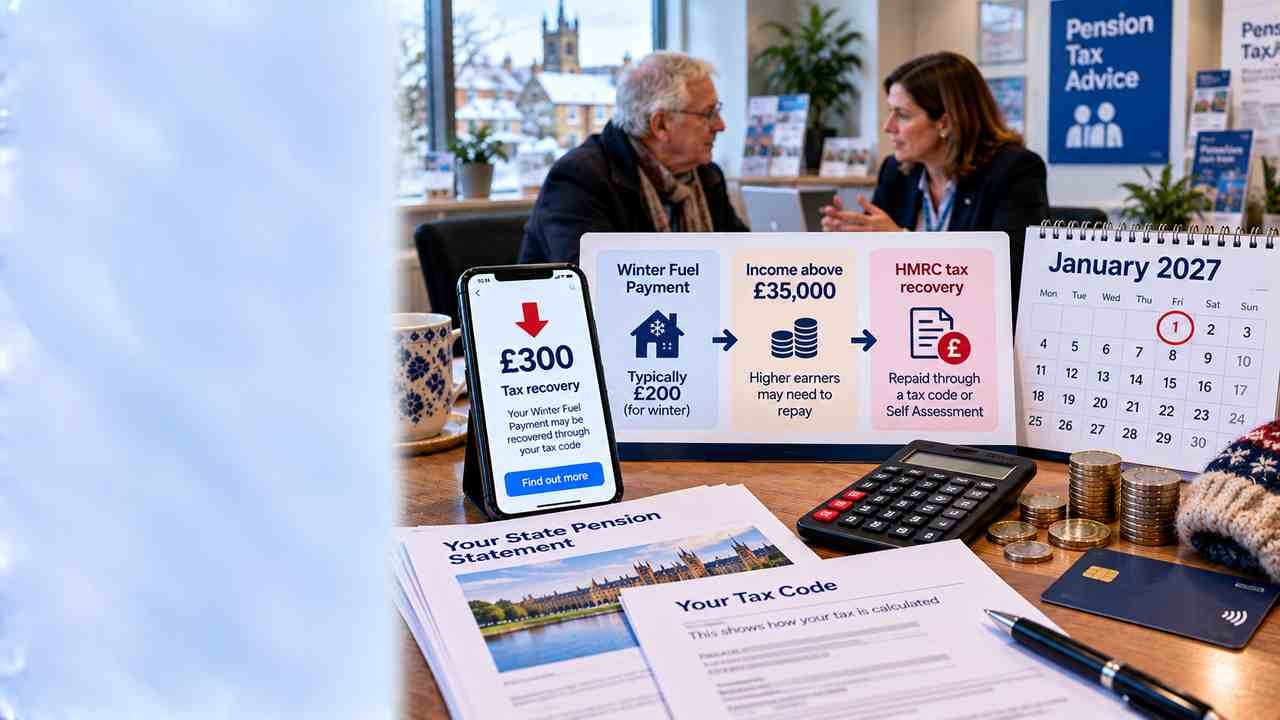
Some UK pensioners could effectively lose up to £300 from their winter support under HMRC rules that require certain higher-income recipients to repay their Winter Fuel Payment through the tax system.
The rule does not apply to every State Pensioner. It mainly affects people whose individual annual income exceeds £35,000 and who receive a Winter Fuel Payment but do not qualify for an exemption.
For winter 2026–27, eligible pensioners in England, Wales and Northern Ireland could receive between £100 and £300, depending on their circumstances. However, those whose income exceeds the government’s threshold may have to repay the full amount through an adjustment to their tax code or their Self Assessment tax bill.
This has raised questions about whether HMRC will take money directly from bank accounts, which pensioners could be affected and how people can check their position before receiving their payment.
Here is what pensioners need to know about the £35,000 income threshold, the repayment process and the circumstances in which the charge may not apply.
Why Could HMRC Recover Up to £300?
The issue concerns the Winter Fuel Payment, which helps eligible older people with their heating costs during winter.
For winter 2026–27, eligible people in England, Wales and Northern Ireland may receive a payment worth between £100 and £300. The amount depends on factors including age and household circumstances.
However, receiving the payment does not necessarily mean someone can keep the money.
Under the current rules, HMRC recovers the equivalent of the Winter Fuel Payment from people whose total individual income for the relevant tax year is more than £35,000, subject to the applicable exemptions.
This means a pensioner who receives a £300 payment could be required to repay the full £300 if the rules apply to them.
The repayment is not reduced gradually as income rises above £35,000. Instead, the charge is generally equal to the full value of the Winter Fuel Payment received.
Importantly, the payment itself is still made in full. The recovery takes place through the tax system rather than by reducing the initial Winter Fuel Payment.
Who Is Affected by the £35,000 Income Rule?
The main group affected is pensioners who meet both of these conditions:
- Their total individual income for the relevant tax year is more than £35,000.
- They receive a Winter Fuel Payment and do not qualify for an applicable exemption.
The income threshold applies to an individual’s income, not the combined income of a couple.
For example, imagine a retired couple where one partner has an annual income of £38,000 and the other has an income of £22,000.
If both receive Winter Fuel Payments, the higher-income partner could be liable for the repayment charge, while the lower-income partner would not be liable under the £35,000 income test.
The circumstances of each person must be considered separately.
This is particularly important for couples who have different State Pension entitlements, private pensions or other sources of taxable income.
Pensioners should also remember that the calculation is based on total income before deductions, rather than simply the amount left after tax.
Does State Pension Count Towards the £35,000 Threshold?
Yes. State Pension is one of the income sources pensioners should consider when checking whether they exceed the threshold.
However, it is not the only one.
Depending on their circumstances, a pensioner’s total income could include:
- State Pension.
- Workplace pension income.
- Private pension income.
- Earnings from employment.
- Income from self-employment.
- Other taxable income included under the relevant rules.
For example, a pensioner receiving £14,000 a year from their State Pension and £16,000 from a workplace pension would have £30,000 from those two sources.
If they also received £7,000 in other income that counts towards the calculation, their total would reach £37,000.
That could put them above the £35,000 threshold, subject to the full rules and any applicable exemption.
The figures above are illustrative, not a calculation of any particular person’s tax liability.
Pensioners should not assume they are below the threshold simply because their State Pension alone is less than £35,000.
Will HMRC Take £300 Directly From a Bank Account?
The headline may sound as though HMRC will withdraw £300 directly from pensioners’ bank accounts.
However, that is not the usual repayment method described in the official guidance.
For people who pay tax through PAYE and are not already required to settle the charge through Self Assessment, HMRC generally recovers the amount by adjusting their tax code.
This means more tax is deducted from their pension, salary or other PAYE income over the relevant period.
For pensioners who complete a Self Assessment tax return, the charge is generally dealt with through their tax calculation and bill.
The exact process depends on the person’s tax arrangements.
HMRC says that if it changes a tax code to recover a Winter Fuel Payment, it will contact the person by email or post. Pensioners should check any tax-code notification carefully and compare it with their expected income and circumstances.
A tax-code adjustment can reduce the amount of pension or salary received after tax, but it is different from an automatic £300 withdrawal from a bank account.
How Much Could Pensioners Pay Back Each Month?
The monthly impact depends on the amount being recovered and the period over which HMRC collects it.
For a typical £200 Winter Fuel Payment, official guidance says the recovery through PAYE is approximately £17 per month during the 2026–27 tax year.
The amount is expected to rise temporarily during the 2027–28 tax year for some people because HMRC will be recovering two winter payments through their tax codes at the same time.
For a typical £200 payment in each of those years, the additional monthly tax deduction could be approximately £33 during that period.
The temporary increase reflects the transition to collecting winter payments within the same tax year in which they are made. It does not mean that every pensioner will face the same monthly deduction.
For someone who received a £300 Winter Fuel Payment, the total amount to be recovered could be higher than for someone who received £200.
The timing and amount of the deductions will depend on the payment involved and the person’s tax arrangements.
Pensioners should check their HMRC notices rather than assuming that a fixed monthly amount applies to everyone.
Which Pensioners May Be Exempt?
Some pensioners can receive a Winter Fuel Payment without having to repay it through the income-threshold charge.
The official rules provide an exemption for people entitled to certain qualifying means-tested benefits during the relevant qualifying week.
These include:
- Pension Credit.
- Universal Credit.
- Income Support.
- Income-based Jobseeker’s Allowance.
- Income-related Employment and Support Allowance.
The precise conditions matter, including whether the person was entitled to a qualifying benefit during the relevant period.
Someone should not assume they are exempt simply because they receive a different benefit or have previously received financial support from the Department for Work and Pensions.
Pensioners who believe they qualify for an exemption should check the official guidance and their individual circumstances.
What About Pensioners Living in Scotland?
Scotland has a different payment arrangement.
Eligible pensioners in Scotland may receive the Pension Age Winter Heating Payment rather than the Winter Fuel Payment administered in England, Wales and Northern Ireland.
The recovery rules also apply to the relevant winter heating payment for people whose income exceeds £35,000, subject to the applicable exemptions.
The amount can differ from the standard Winter Fuel Payment, so pensioners in Scotland should check the guidance for their specific payment rather than relying on figures intended for other parts of the UK.
What Should Pensioners Do if Their Income Is Over £35,000?
Pensioners who expect their total income to exceed £35,000 should check how the recovery rules affect them.
The following steps can help:
1. Calculate your total income
Include your State Pension and other relevant taxable income. Do not look at your State Pension in isolation.
2. Check whether an exemption applies
If you receive Pension Credit or another qualifying benefit, check the official rules for the relevant qualifying week.
3. Review HMRC correspondence
If HMRC adjusts your tax code, check the explanation and the amount it is intended to recover.
4. Check your Self Assessment position
If you submit a tax return, review the Winter Fuel Payment charge shown in your tax calculation. The charge may be included automatically in an online return, but you should still check that the information is correct.
5. Use official guidance
The government’s Winter Fuel Payment guidance explains the income threshold, collection methods and available options.
You can read the official information through the GOV.UK Winter Fuel Payment guidance.
If your circumstances are unclear, consider contacting HMRC or a qualified tax adviser before making assumptions about how much you owe.
Can Pensioners Refuse the Winter Fuel Payment?
Pensioners who expect to exceed the income threshold can choose to opt out of future payments, where the opt-out service is available.
However, the timing matters.
According to the current GOV.UK guidance, pensioners can no longer opt out of the Winter Fuel Payment for winter 2026–27. The option to opt out for winter 2027–28 is due to become available from 21 December 2026.
Someone who does not opt out and whose income exceeds the threshold may receive the payment and then have the amount recovered through the tax system.
Opting out is a personal decision. Pensioners should first check their expected income, eligibility and the official deadlines before deciding what to do.
When Will Winter Fuel Payments Arrive?
Most eligible people are expected to receive their Winter Fuel Payment in November or December 2026.
The payment is generally made automatically to people who qualify and meet the relevant conditions. Some people may need to make a claim, depending on their circumstances.
Eligible pensioners should receive a letter explaining how much they are due and which bank account will receive the money.
The government says that people who have not received their payment or letter by 27 January 2027 should contact the Winter Fuel Payment Centre.
Receiving the money does not necessarily mean that a person will be allowed to keep it permanently. If their income exceeds £35,000 and no exemption applies, the recovery process may follow through the tax system.
How Can Pensioners Avoid Confusion or Scams?
Messages claiming that HMRC is about to remove £300 directly from every pensioner’s bank account should be treated with caution.
The rules do not apply to everyone, and the usual recovery process is through PAYE tax codes or Self Assessment rather than a universal direct bank withdrawal.
Pensioners should not click suspicious links or share their bank details, passwords or security codes in response to unexpected messages.
Instead, they should visit GOV.UK independently and check the official Winter Fuel Payment guidance.
If a tax-code change appears incorrect, contact HMRC using contact details obtained from an official government source.
What Pensioners Need to Remember
The key issue is the £35,000 individual income threshold.
Some pensioners receiving a Winter Fuel Payment worth up to £300 could have to repay the full amount if their income exceeds that threshold and they do not qualify for an exemption.
However, this is not a universal £300 deduction from State Pension payments or bank accounts.
HMRC generally recovers the charge through a PAYE tax-code adjustment or Self Assessment. The amount and timing depend on the payment received and the individual’s tax circumstances.
Pensioners should check their total income, confirm whether an exemption applies and review any official HMRC correspondence before drawing conclusions about their own position.