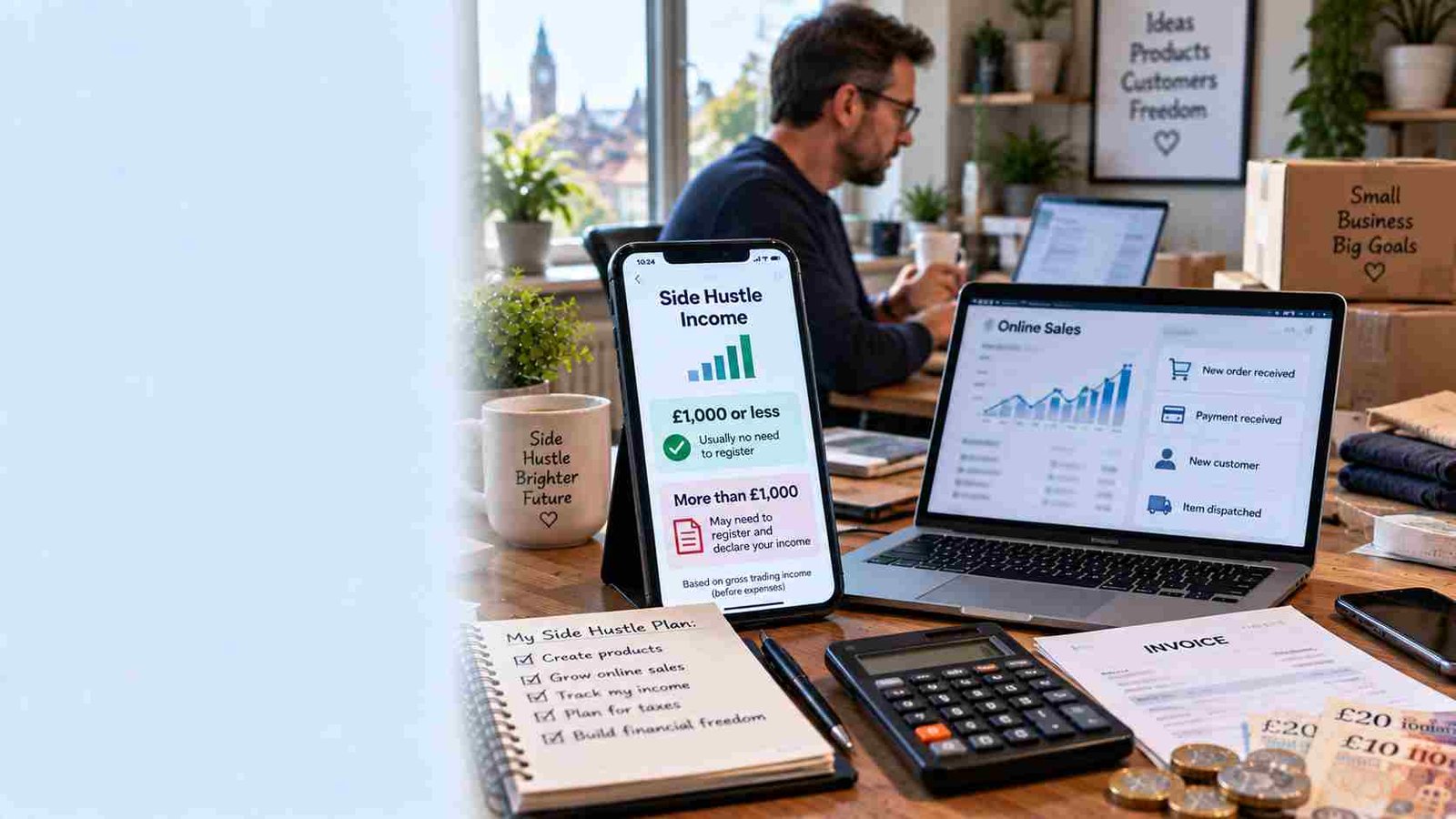
Millions of people across the UK are earning extra money through side hustles, from selling handmade products and freelancing to content creation and online marketplaces. However, HM Revenue and Customs (HMRC) has reminded individuals that earning more than £1,000 from these activities could mean they need to report the income and may have tax obligations.
While not everyone earning over the threshold will have to pay tax, understanding the rules can help avoid unexpected penalties and ensure you remain compliant with HMRC requirements.
Here’s what side hustle earners need to know.
What Is the £1,000 Trading Allowance?
The UK has a Trading Allowance that allows individuals to earn up to £1,000 in gross income from self-employed work or casual trading each tax year without normally having to declare it.
This allowance can apply to activities such as:
- Freelancing
- Online selling
- Tutoring
- Dog walking or pet sitting
- Gardening or handyman work
- Creating digital content
- Craft or handmade product sales
If your gross income from these activities exceeds £1,000, different tax reporting rules may apply.
Does Earning Over £1,000 Mean You Will Pay Tax?
Not necessarily.
Crossing the £1,000 threshold does not automatically mean you owe Income Tax. However, you may need to register for Self Assessment and report your earnings to HMRC.
Whether you actually pay tax depends on factors such as:
- Your total annual income.
- Allowable business expenses.
- Other sources of taxable income.
- Any available tax reliefs or allowances.
Who Could Be Affected?
The HMRC warning may apply to people who earn money from:
- Selling products online.
- Freelance or contract work.
- Social media or content creation.
- Driving or delivery services.
- Renting out equipment.
- Providing local services.
- Other self-employed activities.
Even if your side hustle is only part-time, you should understand the reporting rules if your earnings exceed the allowance.
What Should You Do?
If you think your side hustle income may be over £1,000, consider:
- Keeping accurate records of all income and expenses.
- Checking whether you need to register for Self Assessment.
- Saving receipts and invoices.
- Reviewing HMRC guidance before the tax deadline.
- Seeking professional tax advice if you’re unsure.
Good record-keeping can make completing a tax return much easier.
Common Misunderstandings
Many people believe that earning more than £1,000 automatically results in a tax bill.
This is not always true.
The £1,000 figure is primarily a reporting threshold under the Trading Allowance. Your final tax liability depends on your overall financial situation and applicable tax rules.
Beware of HMRC Scams
Whenever tax-related stories make headlines, scammers often send fake emails or text messages pretending to be from HMRC.
Avoid clicking on unexpected links or sharing personal or banking information unless you have verified the communication through official HMRC channels.
Final Thoughts
Side hustles continue to grow in popularity across the UK, but it’s important to understand your tax responsibilities. If your side hustle generates more than £1,000 in gross income during the tax year, you may need to report it to HMRC, even if you ultimately owe little or no tax.
Checking the current HMRC rules, keeping accurate records and meeting any reporting deadlines can help you avoid unnecessary penalties and manage your side hustle with confidence.