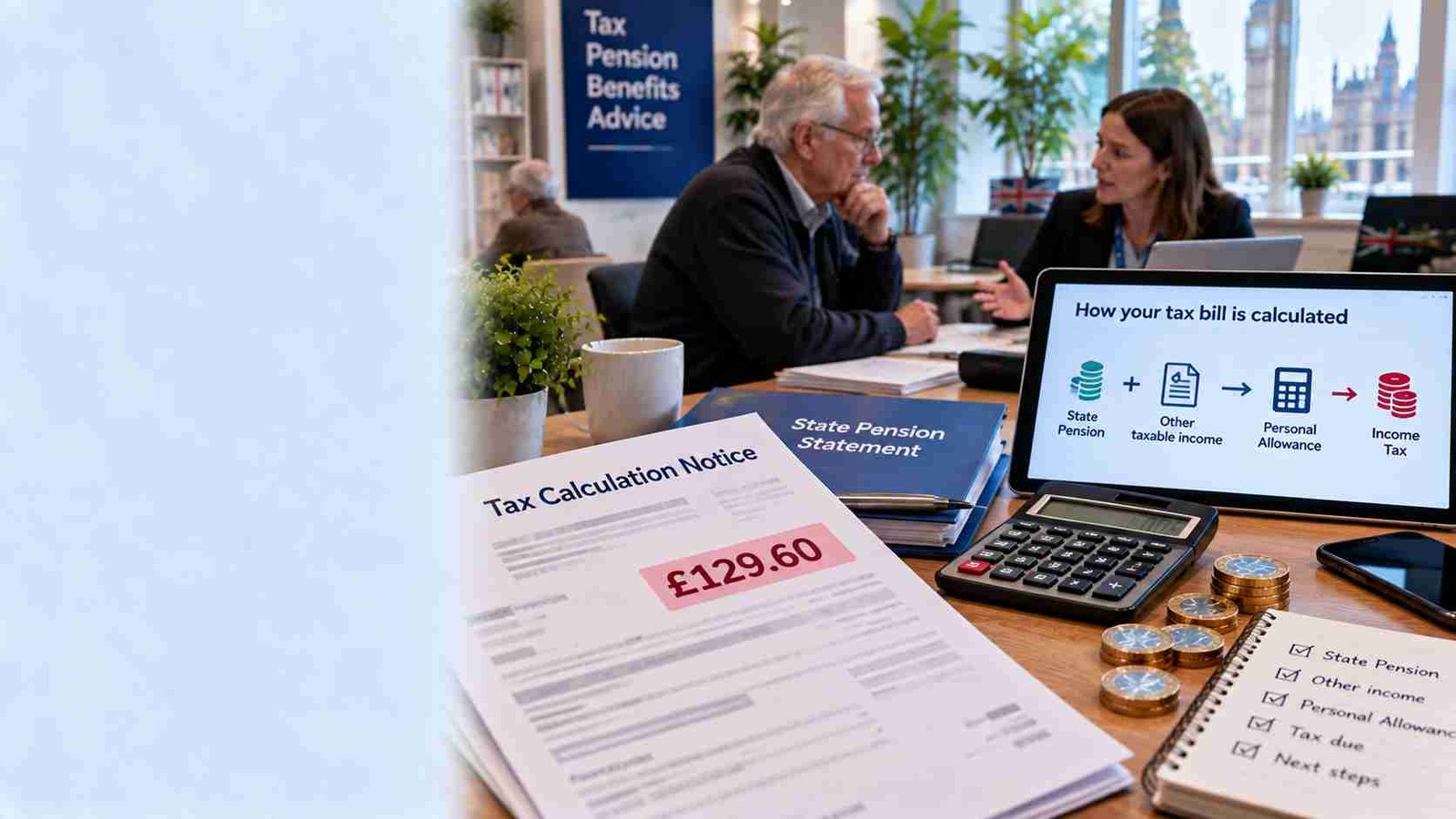
A State Pensioner has spoken about receiving an unexpected £129.60 tax bill from HM Revenue and Customs (HMRC), highlighting how changes to retirement income and tax codes can sometimes lead to additional charges.
While the amount involved is relatively small, the case has prompted many pensioners to check their own tax position. Financial experts say similar situations can occur when pension income, tax codes or other sources of taxable income are not fully aligned during the tax year.
Here’s what may have caused the extra charge and what pensioners should know.
Why Might a State Pensioner Receive an Unexpected Tax Bill?
Many people assume that once they retire, they no longer need to worry about Income Tax. However, this isn’t always the case.
Although the State Pension itself is taxable, tax is usually not deducted before it is paid. Instead, HMRC may collect any tax due through another pension, employment income or by issuing a tax calculation.
If too little tax has been collected during the year, a pensioner could receive a bill asking them to pay the difference.
What Can Trigger an Extra HMRC Charge?
There are several reasons why an unexpected tax bill may arise, including:
- An incorrect or outdated tax code.
- Receiving more than one pension.
- Starting to receive the State Pension during the tax year.
- Changes to taxable income that HMRC had not yet processed.
- Underpaid tax from a previous tax year.
Every case is different, and the amount owed depends on an individual’s personal circumstances.
Why Is the State Pension Important?
The State Pension counts as taxable income, even though tax is not usually taken from the payment itself.
If your total taxable income from the State Pension, workplace pensions, private pensions or employment exceeds your available Personal Allowance, you may have Income Tax to pay.
HMRC normally adjusts your tax code to collect the correct amount, but timing differences or administrative updates can sometimes result in underpayments.
What Should Pensioners Check?
If you receive a tax calculation or bill from HMRC, it’s worth reviewing:
- Your current tax code.
- Your annual State Pension income.
- Any workplace or private pension payments.
- Other taxable income, including employment if you still work.
- HMRC letters explaining how the calculation was made.
Checking these details can help you understand whether the amount is correct.
Can You Challenge the Tax Bill?
Yes, if you believe the calculation is incorrect.
You can contact HMRC and ask for an explanation of how the tax has been calculated. If you think there has been an error, you may be able to request a review or provide updated information.
Before making any payment, ensure you understand exactly what the bill relates to.
How Can Pensioners Avoid Future Surprises?
Reviewing your tax position each year can help reduce the risk of unexpected bills.
Simple steps include:
- Checking your tax code regularly.
- Informing HMRC about changes to your income.
- Keeping pension information up to date.
- Reading HMRC correspondence carefully.
- Reviewing your annual tax summary when it becomes available.
Taking these steps can help ensure the correct amount of tax is collected throughout the year.
Beware of HMRC Scams
Whenever stories about tax bills make the headlines, fraudsters often attempt to exploit the situation.
Be cautious of emails, text messages or phone calls claiming you owe tax and asking you to make an immediate payment. Genuine HMRC communications should always be verified through official channels before you share personal or financial information.
Final Thoughts
An unexpected £129.60 HMRC tax bill serves as a reminder that retirement does not automatically remove your Income Tax responsibilities. Changes to your tax code, multiple sources of pension income or adjustments during the tax year can all affect how much tax you owe.
If you receive a tax bill from HMRC, take the time to review the calculation carefully, check your tax code and confirm that the information used is accurate. Staying informed and keeping your records up to date can help prevent unexpected tax charges in the future.