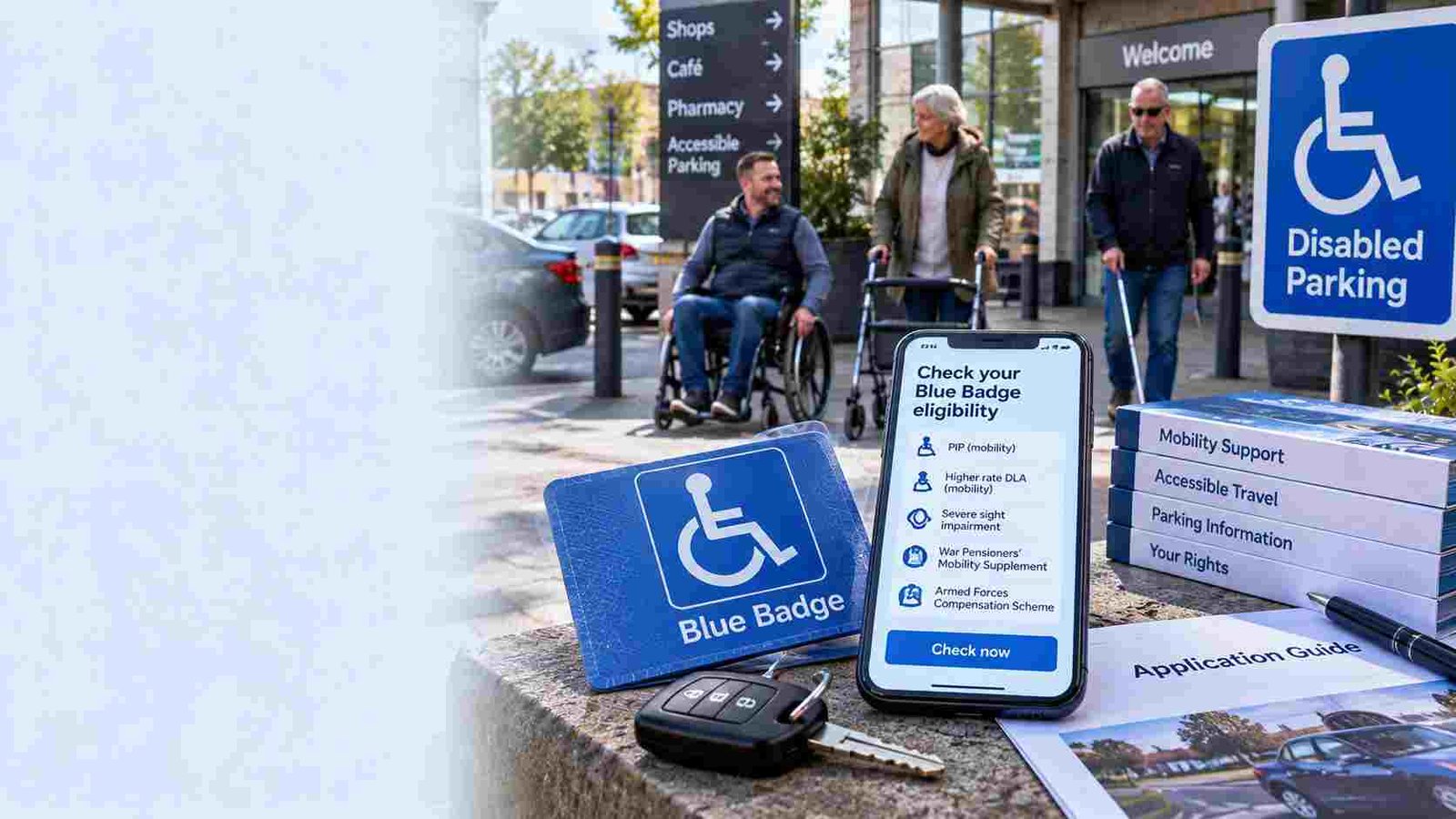
Thousands of people across the UK could be entitled to a Blue Badge, giving them easier access to parking spaces closer to shops, hospitals and other essential services. However, many eligible people are still unaware that they may qualify automatically under the current rules.
The Blue Badge scheme is designed to help people with severe mobility problems or certain disabilities travel more easily. While some applications require an assessment, others can be approved automatically if the applicant receives specific benefits or meets certain eligibility criteria.
Here’s what you need to know about the groups that may automatically qualify.
What Is the Blue Badge Scheme?
The Blue Badge scheme allows eligible people to park closer to their destination, making everyday journeys easier for those with mobility difficulties.
The badge can usually be used in designated disabled parking bays and, in many areas, offers additional parking concessions. The exact rules can vary depending on the local authority.
Who Could Automatically Qualify?
You may automatically qualify for a Blue Badge if you fall into one of several eligible groups, including people who:
- Receive the higher rate of the mobility component of Disability Living Allowance (DLA).
- Receive Personal Independence Payment (PIP) with the qualifying mobility score.
- Receive Adult Disability Payment (ADP) with the relevant mobility award in Scotland.
- Receive Child Disability Payment (CDP) with the qualifying mobility component.
- Are registered as severely sight impaired (blind).
- Receive a War Pensioners’ Mobility Supplement.
- Receive the Armed Forces Compensation Scheme payment that includes a qualifying mobility award.
- Meet other automatic eligibility rules set out by the relevant authority.
Some local authorities may also consider additional categories under assessment-based applications.
What If You Don’t Automatically Qualify?
Not qualifying automatically does not necessarily mean you cannot get a Blue Badge.
Many people are eligible through a further assessment if they have:
- Significant difficulty walking.
- A long-term physical disability.
- A hidden disability that affects safe travel.
- Serious mental health conditions that impact mobility.
- Other medical conditions meeting the scheme’s criteria.
Each application is considered on its own merits.
What Are the Benefits of a Blue Badge?
A Blue Badge can make day-to-day travel easier by allowing eligible people to:
- Park closer to essential services.
- Reduce walking distances.
- Access designated disabled parking bays.
- Improve independence when travelling.
Local parking rules may vary, so it’s important to check guidance in your area.
How to Apply
Applications are usually made through your local council or the relevant government service.
You’ll typically need to provide:
- Proof of identity.
- Proof of address.
- Details of qualifying benefits (if applicable).
- Medical or supporting evidence if an assessment is required.
- A recent photograph.
Providing complete information can help avoid unnecessary delays.
Common Misunderstandings
Some people believe only wheelchair users qualify for a Blue Badge.
This is not true.
The scheme covers a wide range of physical and, in some cases, hidden disabilities. Eligibility depends on the official criteria rather than a single medical condition.
Why It’s Worth Checking
Many eligible people never apply because they assume they won’t qualify.
If your health has changed recently or you have started receiving a qualifying benefit, reviewing the eligibility rules could help you access support that makes daily travel much easier.
Final Thoughts
The Blue Badge scheme provides valuable support for people with mobility challenges, but many eligible individuals still miss out because they are unaware of the rules. While some people qualify automatically through specific disability benefits, others may be eligible after an assessment.
If you think you could qualify, checking the current eligibility criteria and submitting a complete application could help you access parking concessions that make everyday journeys safer, easier and more convenient.