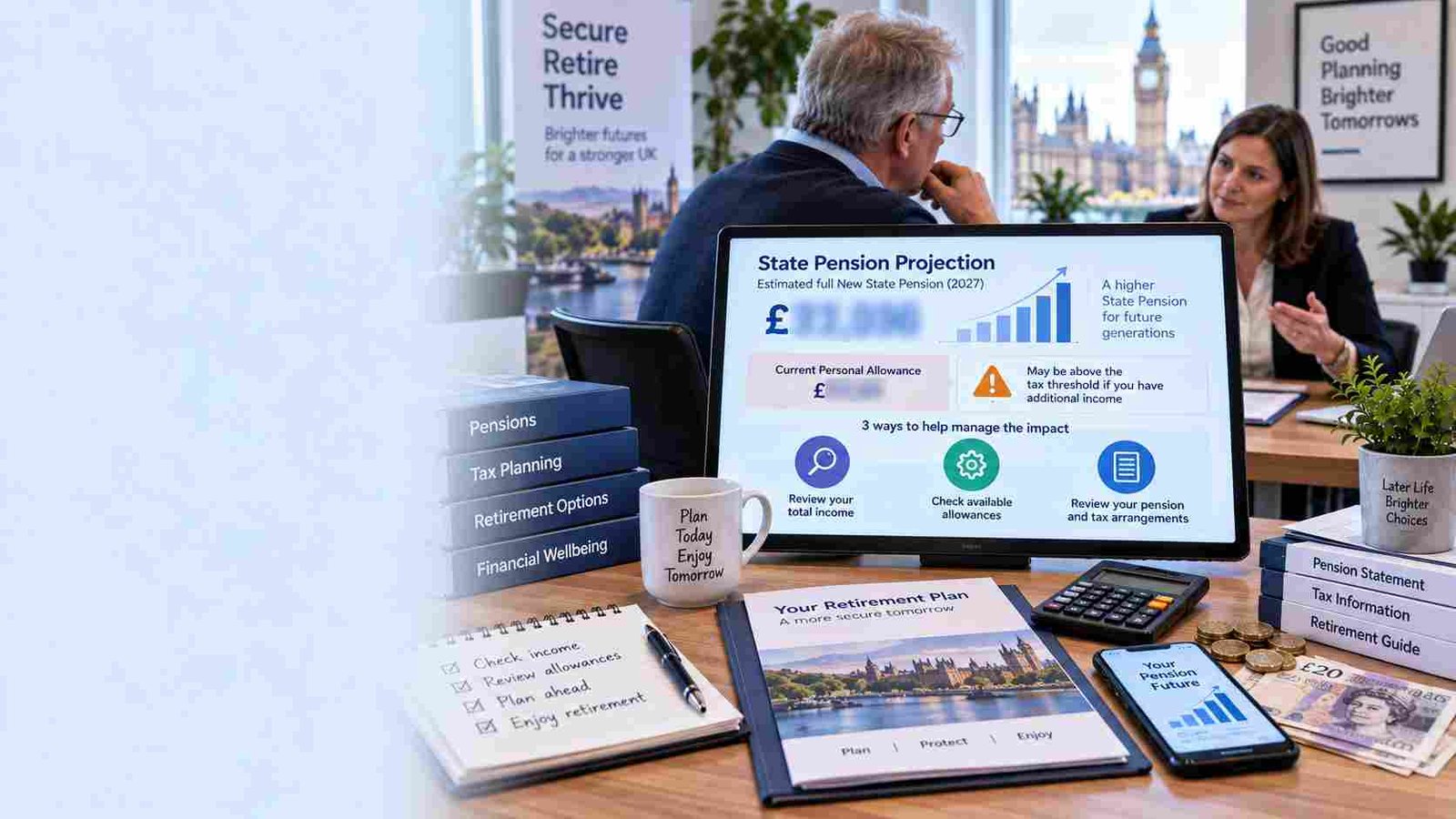
Millions of pensioners across the UK could see the New State Pension rise to around £13,036 a year if future increases continue under the Government’s Triple Lock policy. While higher payments would be welcome news for retirees coping with rising living costs, experts warn that the increase could also push more people into paying Income Tax.
The concern centres on the UK’s Personal Allowance, which remains at £12,570. If the full State Pension exceeds this threshold and a pensioner has additional taxable income, they may need to pay tax on part of their earnings.
Here’s what the latest projections mean and three practical ways to help avoid falling into the so-called tax trap.
Why Could the State Pension Reach £13,036?
The State Pension rises each year under the Triple Lock, which guarantees an increase based on the highest of:
- Average earnings growth
- Inflation
- 2.5%
If earnings continue to grow strongly, forecasts suggest the full New State Pension could reach around £13,036 annually in the coming years.
Although the exact amount has not yet been confirmed by the Government, the projections have sparked fresh discussion about how rising pension payments may affect tax bills.
Why Is It Called a Tax Trap?
The State Pension is taxable income, even though tax is not deducted before payments are made.
If your combined taxable income—including the State Pension, workplace pensions, private pensions or other earnings—goes above the Personal Allowance, HM Revenue and Customs (HMRC) may collect Income Tax through your tax code or Self Assessment.
For some retirees, this could mean receiving a higher pension while also facing an unexpected tax bill.
Who Could Be Affected?
The people most likely to be affected are those who receive:
- The full New State Pension.
- A workplace pension.
- A private pension.
- Income from part-time work.
- Rental income.
- Savings or investment income.
If your only income is the State Pension and it remains below the tax-free allowance, you may not owe any Income Tax.
Three Ways to Avoid the Tax Trap
1. Review Your Total Retirement Income
Don’t look at your State Pension in isolation.
Add together all taxable income, including workplace pensions, private pensions, employment income and savings interest. This will help you understand whether you’re approaching the Personal Allowance.
2. Check Your HMRC Tax Code
An incorrect tax code could mean you’re paying too much—or too little—tax.
Review your tax code regularly, especially if your retirement income changes, to ensure HMRC has the correct information.
3. Plan Pension Withdrawals Carefully
If you have a private pension, consider when and how you take withdrawals.
Spreading withdrawals over several tax years or seeking independent financial advice may help reduce unexpected tax liabilities, depending on your personal circumstances.
Will Every Pensioner Pay More Tax?
No.
The headline figure does not mean every pensioner will face a tax bill.
Whether you pay Income Tax depends on your total taxable income, not the State Pension alone. Many retirees will remain below the Personal Allowance and continue paying no Income Tax.
Why Experts Are Paying Attention
Financial experts have warned that if the Personal Allowance remains frozen while the State Pension continues to increase, more retirees could gradually enter the tax system.
This process is known as fiscal drag, where rising incomes result in higher tax liabilities even though tax rates themselves have not changed.
As annual pension increases continue, more pensioners may need to review their tax position.
What Should Pensioners Do Now?
While no immediate action is required, it’s sensible to prepare ahead.
You should consider:
- Checking your State Pension forecast.
- Reviewing all sources of taxable income.
- Confirming your HMRC tax code is accurate.
- Monitoring future Government announcements on the Triple Lock and tax thresholds.
- Seeking independent financial advice if you have several income sources.
Planning ahead can help reduce the risk of unexpected tax bills.
Final Thoughts
The possibility of the State Pension reaching £13,036 a year is positive news for many retirees, but it also highlights the importance of understanding how higher pension payments interact with the UK’s tax system.
Although not every pensioner will be affected, those with additional retirement income could find themselves crossing the Personal Allowance. Reviewing your finances, checking your tax code and staying informed about future Government announcements can help you make the most of your retirement income while avoiding unexpected tax surprises.