Thousands of people across the UK living with muscle and joint conditions could be entitled to Personal Independence Payment (PIP) worth up to £778 a month, depending on how their condition affects their everyday life.
Recent guidance has highlighted that people with dozens of musculoskeletal conditions—including arthritis, chronic back pain and other long-term mobility issues—may qualify for financial support if they meet the Department for Work and Pensions (DWP) eligibility criteria.
Many eligible people are unaware they could claim the benefit, meaning they may be missing out on valuable financial assistance.
What Is PIP?
Personal Independence Payment (PIP) is a non-means-tested benefit designed to help people aged 16 and over who have a long-term physical or mental health condition or disability.
The payment is intended to help with the additional costs of living with a disability. Your income, savings or employment status do not usually affect whether you can claim.
PIP is made up of two components:
- Daily Living
- Mobility
Depending on your circumstances, you may receive one or both components.
Which Muscle and Joint Conditions Could Qualify?
The DWP recognises a wide range of musculoskeletal conditions when assessing PIP claims. These can include:
- Osteoarthritis
- Rheumatoid arthritis
- Ankylosing spondylitis
- Fibromyalgia
- Chronic back pain
- Degenerative disc disease
- Osteoporosis
- Joint replacements
- Tendon disorders
- Other long-term muscle, bone and joint conditions
Overall, guidance refers to 86 recognised muscle and joint conditions that may be considered during the assessment process.
Does Having One of These Conditions Guarantee PIP?
No.
Simply having a diagnosis does not automatically qualify someone for PIP.
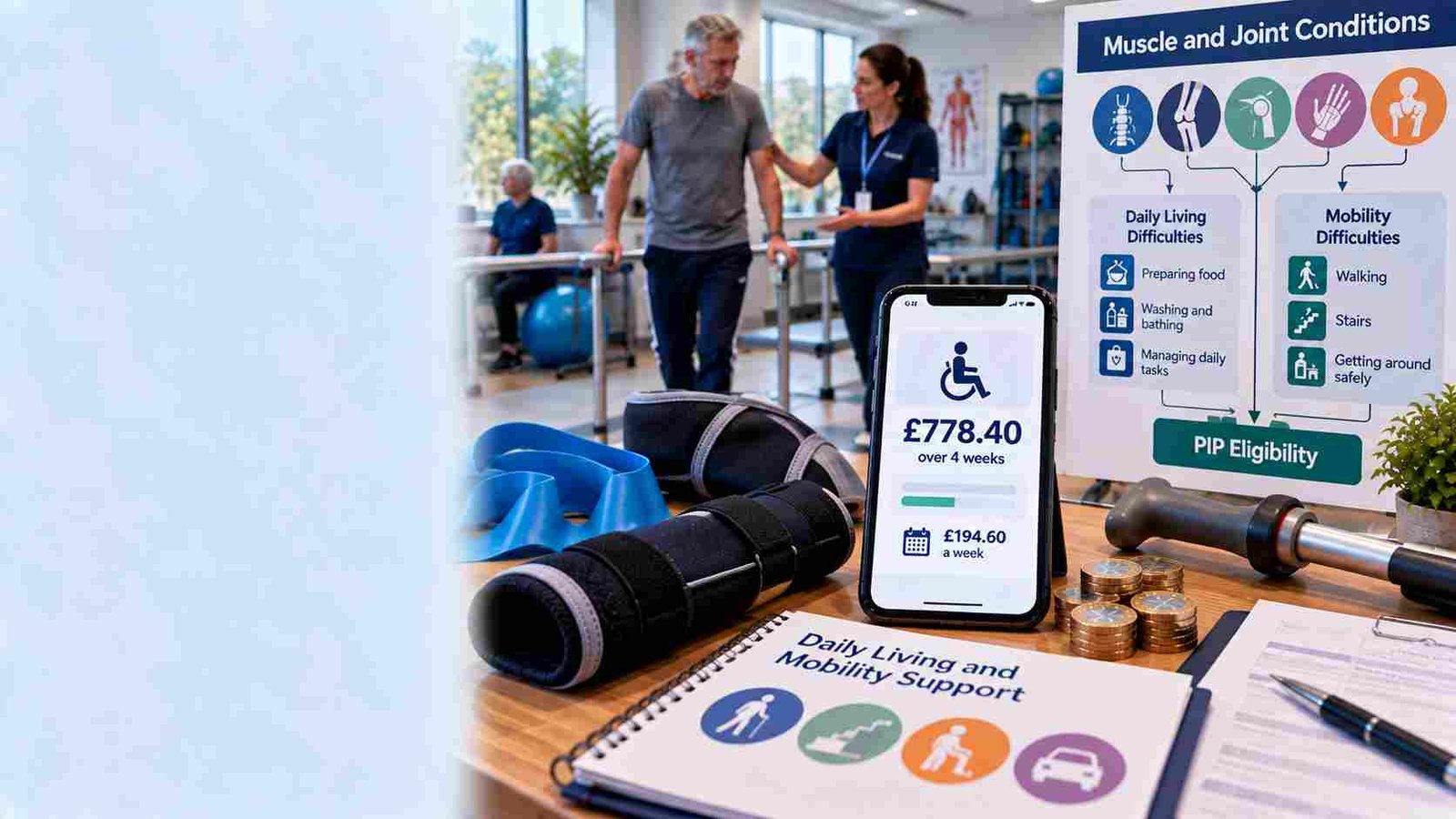
Instead, the DWP assesses how your condition affects your ability to carry out everyday activities, such as:
- Preparing food.
- Washing and dressing.
- Managing medication.
- Communicating.
- Moving around safely.
- Planning and following journeys.
Your award depends on the points scored during the assessment rather than the name of your medical condition.
How Much Could You Receive?
Eligible claimants may receive payments based on the level of support they need.
People awarded both the enhanced Daily Living and enhanced Mobility components could receive up to around £778 a month, based on current benefit rates.
The amount you receive depends entirely on your individual assessment.
How Do You Apply?
If you think you may qualify, you should:
- Check the latest PIP eligibility criteria.
- Contact the DWP to begin a claim.
- Complete the application form with detailed information.
- Provide medical or supporting evidence where possible.
- Attend an assessment if requested.
Giving clear examples of how your condition affects your daily life can help ensure your claim is assessed accurately.
Common Misunderstandings
Some people believe PIP is only available to wheelchair users or people with severe disabilities.
That is not true.
Many people with muscle and joint conditions qualify because of chronic pain, fatigue, reduced mobility or difficulty completing everyday tasks, even if they continue to work or live independently.
Why It’s Worth Checking
Musculoskeletal conditions are among the most common long-term health problems in the UK, yet many eligible people never apply for PIP.
If your condition affects your ability to carry out daily activities or move around safely, checking your eligibility could help you access financial support that eases some of the extra costs associated with your disability.
Final Thoughts
People living with one of 86 recognised muscle and joint conditions may be eligible for PIP worth up to £778 a month, but entitlement depends on how the condition affects day-to-day life rather than the diagnosis itself.
If you believe your condition has a significant impact on your daily living or mobility, reviewing the current DWP guidance and making a claim could help you receive the financial support you are entitled to.