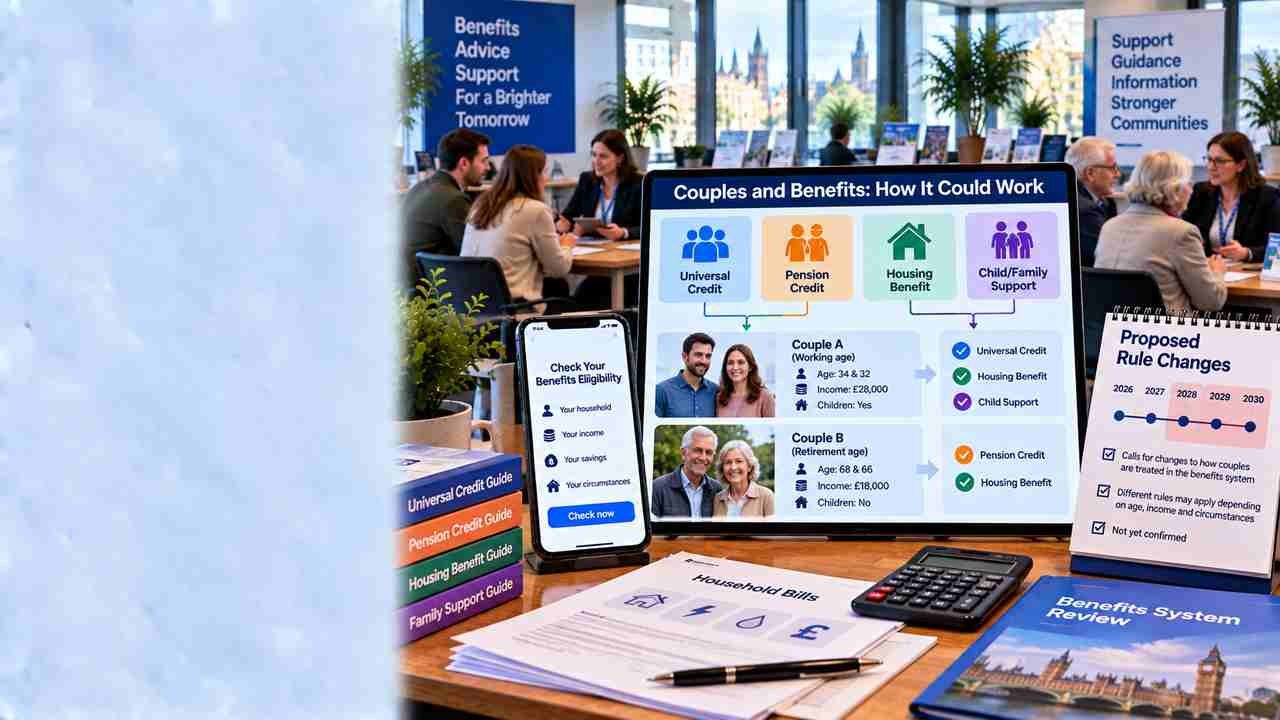
Fresh calls to reform Department for Work and Pensions (DWP) rules for couples have reignited debate over how some UK benefits are assessed. Campaigners argue that the current system can leave some couples financially disadvantaged, particularly where one partner has a disability, health condition or low income.
Although no changes have been officially approved, the discussion has raised questions about which benefits could be affected if the Government decides to review existing rules.
Here’s a look at the four key benefits at the centre of the debate.
Why Are Campaigners Calling for Rule Changes?
Several organisations and welfare experts believe the current assessment system does not always reflect the financial realities faced by couples.
They argue that some households lose entitlement or receive reduced payments because a partner’s income or savings are taken into account, even when one person has additional care or living costs.
Any future changes would require Government approval before coming into force.
1. Universal Credit
Universal Credit is one of the main benefits under discussion because couples usually make a joint claim.
The amount paid is based on the household’s combined income, savings and personal circumstances. Campaigners have suggested reviewing these rules to ensure couples with additional financial pressures receive appropriate support.
2. Pension Credit
Pension Credit helps eligible older people on lower incomes, but entitlement can depend on the income and circumstances of both partners.
Some groups have called for changes to how couples are assessed, particularly where one partner has reached State Pension age and the other has not.
3. Personal Independence Payment (PIP)
Although Personal Independence Payment (PIP) is an individual benefit and is not means-tested, campaigners say wider DWP policy changes affecting couples could have an indirect impact on households where one partner receives disability support while the other claims income-related benefits.
No changes to PIP eligibility have been confirmed.
4. Employment and Support Allowance (ESA)
For some claimants receiving Employment and Support Allowance (ESA), household circumstances can affect entitlement depending on the type of ESA being claimed.
Campaigners believe reviewing the rules for couples could improve financial support for households where illness or disability limits one or both partners’ ability to work.
Has the DWP Confirmed Any Rule Changes?
At present, no official changes have been announced.
The current rules for Universal Credit, Pension Credit, PIP and ESA remain in place. Any reforms would need to go through the Government’s decision-making process before being introduced.
What Should Couples Do Now?
If you currently receive DWP benefits, it’s worth:
- Checking your latest award notice.
- Reporting any changes in your household circumstances.
- Reviewing whether you’re claiming all the benefits you’re entitled to.
- Following official DWP announcements for confirmed policy updates.
- Seeking independent welfare advice if you’re unsure how the current rules apply to your situation.
Beware of Online Rumours
Stories about benefit reforms often spread quickly on social media.
Remember that proposals and campaign calls are not the same as confirmed Government policy. Always rely on official DWP announcements before expecting changes to your payments or eligibility.
Final Thoughts
Calls to change DWP rules for couples have focused attention on how benefits are assessed and whether the current system provides enough support for households with complex financial circumstances. While Universal Credit, Pension Credit, PIP and ESA are among the benefits being discussed, no official reforms have yet been confirmed.
For now, existing eligibility rules remain unchanged, and claimants should continue to follow current DWP guidance while keeping an eye on any future announcements.