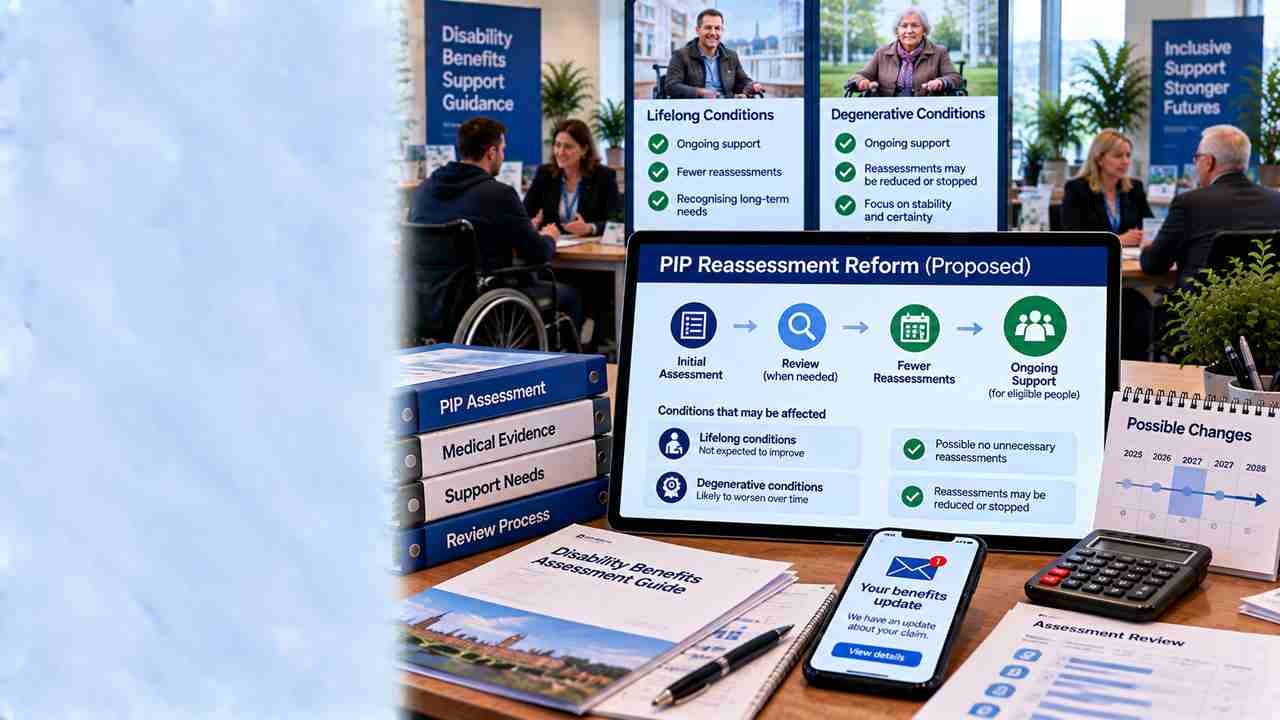
Fresh calls for changes to the Department for Work and Pensions (DWP) assessment system could mean that two groups of Personal Independence Payment (PIP) claimants may no longer need to undergo regular reassessments if proposed reforms are introduced.
Campaigners and disability organisations argue that some people with lifelong or progressive health conditions face unnecessary stress by repeatedly proving their eligibility for support, even when their condition is unlikely to improve.
While the proposals have attracted attention, no official changes have yet been confirmed. Here’s what claimants need to know.
Why Are Changes Being Proposed?
PIP is designed to help people with the extra costs of living with a long-term illness, disability or health condition. At present, many claimants are required to undergo periodic reviews to check whether they still qualify.
Campaigners believe the current process can place an unnecessary burden on people whose medical conditions are permanent or expected to worsen over time.
They are calling for the DWP to introduce a more flexible system that reduces the need for repeat assessments in appropriate cases.
Which Two Groups Could Benefit?
Although no policy has been adopted, the latest calls focus on two main groups:
1. People With Lifelong Conditions
Individuals with lifelong disabilities or conditions that are not expected to improve could potentially receive ongoing awards without routine reassessments.
Supporters argue that repeated reviews offer little value where medical evidence already confirms a permanent condition.
2. People With Progressive Conditions
Those living with progressive illnesses, where symptoms are expected to worsen rather than improve, could also benefit from fewer reassessments.
Campaigners say this would reduce unnecessary paperwork and allow claimants to focus on managing their health rather than repeatedly completing assessment forms.
Has the DWP Confirmed Any Changes?
No.
At the time of writing, the DWP has not announced any official policy ending reassessments for these groups.
Current PIP review rules remain in place, and claimants should continue to respond to review requests unless they are officially informed otherwise.
What Happens During a PIP Review?
When a review takes place, the DWP may ask claimants to provide:
- Updated medical information.
- Details about daily living and mobility needs.
- Supporting evidence from healthcare professionals.
- Information about any changes in their condition.
The review helps determine whether the current award should remain the same, increase, decrease or end.
What Should Claimants Do?
If you currently receive PIP, it’s important to:
- Read all DWP correspondence carefully.
- Complete review forms before the deadline.
- Provide up-to-date medical evidence where possible.
- Report significant changes to your condition.
- Keep copies of any documents you send.
Following the existing rules remains the safest approach until any reforms are officially introduced.
Why the Debate Matters
Disability charities have long argued that reducing unnecessary reassessments could make the benefits system less stressful for people with severe or permanent conditions.
Supporters believe a more targeted review process would allow the DWP to focus resources on claims where circumstances are more likely to change, while giving long-term claimants greater certainty.
Final Thoughts
Calls to end PIP reassessments for people with lifelong and progressive conditions have renewed debate about how disability benefits are managed in the UK. However, no official DWP changes have been confirmed, and the current review process remains in place.
For now, PIP claimants should continue following existing DWP guidance, respond to review requests on time and monitor official announcements for any confirmed changes to the assessment system.