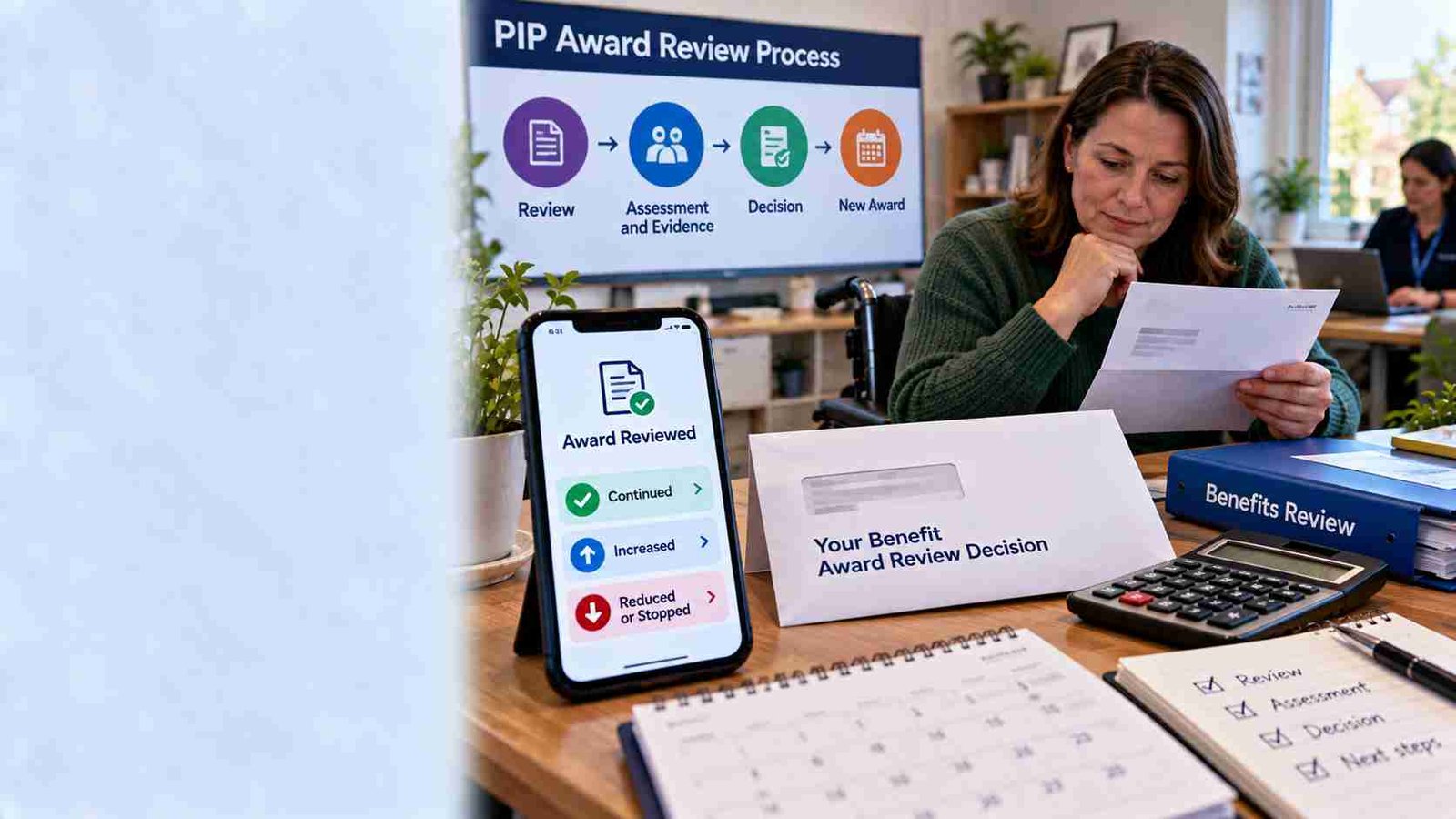
Thousands of people claiming Personal Independence Payment (PIP) go through award reviews every year to ensure they still meet the eligibility rules set by the Department for Work and Pensions (DWP). For many claimants, waiting for a decision can be an anxious time, particularly if they are unsure how it could affect their payments.
While some people continue receiving the same amount, others may see their award increase, decrease or, in some cases, come to an end. The outcome depends on how the review assesses the impact of a claimant’s health condition or disability on their daily life and mobility.
Here’s what could happen after a PIP award review decision.
Why Does the DWP Carry Out PIP Reviews?
PIP reviews are intended to check whether a claimant’s circumstances have changed since their last assessment.
The DWP looks at whether your condition affects your ability to carry out daily living activities and move around. Reviews help ensure people receive the correct level of financial support based on their current needs.
Not every review results in a change to an award.
What Could Happen After the Decision?
Once the review has been completed, the DWP will write to you with its decision.
Possible outcomes include:
- Your award stays the same if your circumstances have not changed.
- Your payments increase if your condition has worsened and you qualify for a higher rate.
- Your payments decrease if you no longer meet the criteria for your current award.
- Your PIP award ends if the DWP decides you are no longer eligible under the assessment rules.
Each decision is based on the evidence available at the time of the review.
When Will Payments Change?
If the review results in a different award, the decision letter will explain when any changes take effect.
In many cases:
- Existing payments continue until the review is completed.
- Increased awards may be backdated where appropriate.
- Reduced or stopped payments usually follow the timetable set out in the decision notice.
Claimants should read the letter carefully to understand the dates that apply to their case.
What Evidence Does the DWP Consider?
During a review, the DWP may look at:
- The completed review form.
- Medical reports and supporting documents.
- Information from healthcare professionals.
- Assessment reports, where required.
- Any additional evidence submitted by the claimant.
Providing clear and up-to-date information can help ensure your circumstances are accurately reflected.
What If You Disagree With the Decision?
If you think the decision is wrong, you have the right to challenge it.
The first step is usually to request a Mandatory Reconsideration, where the DWP reviews the decision again.
If you still disagree after that stage, you may be able to appeal to an independent tribunal.
The decision letter explains the relevant time limits and how to request a review.
What Should Claimants Do?
If you’re waiting for a PIP review outcome, it’s a good idea to:
- Read all DWP correspondence carefully.
- Keep copies of medical evidence and supporting documents.
- Report any significant changes in your circumstances.
- Respond promptly to any requests for additional information.
- Check the decision letter for payment dates and appeal rights.
Staying organised can make the review process easier to manage.
Beware of Misinformation
Stories about PIP reviews often lead to confusion online.
Remember that every claim is assessed individually, and one person’s outcome does not determine another’s. Relying on official DWP correspondence is the best way to understand your own situation.
Final Thoughts
A PIP award review does not automatically mean your payments will change. Some claimants will continue receiving the same level of support, while others may see their award increase, decrease or end depending on the evidence reviewed by the DWP.
Checking your decision letter carefully, keeping your information up to date and understanding your rights if you disagree with the outcome can help you navigate the review process with confidence.