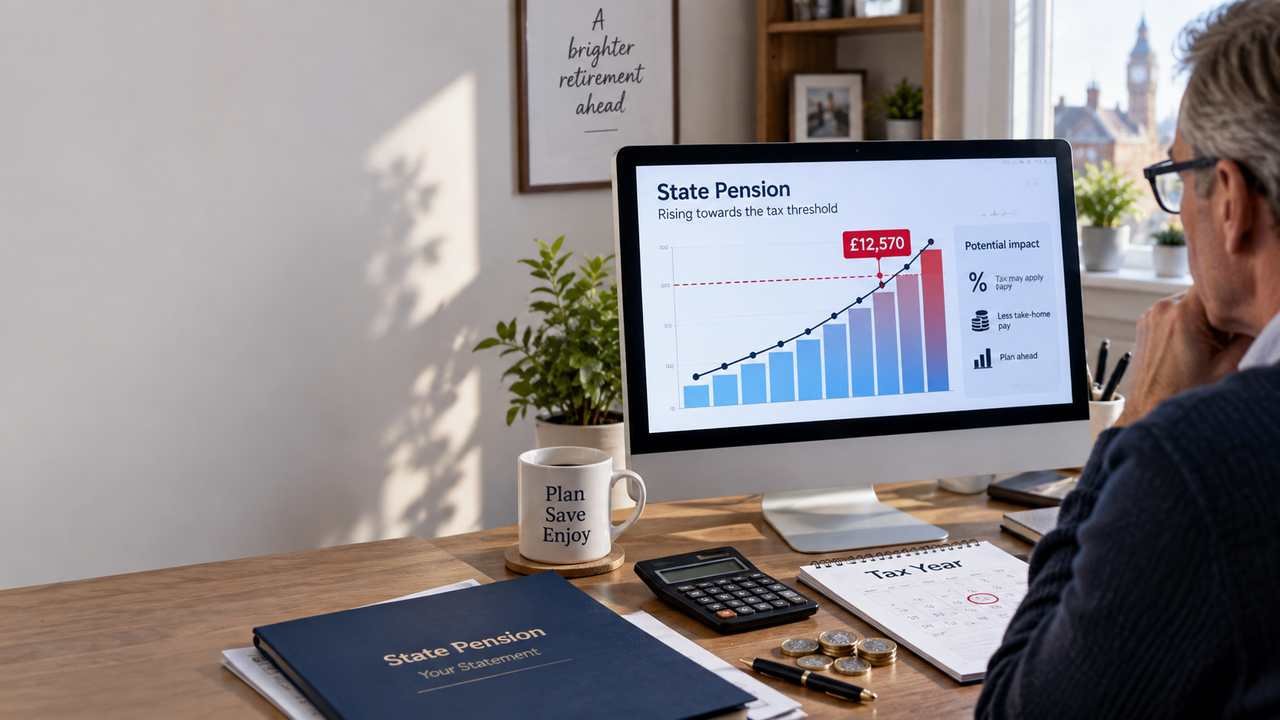
Millions of pensioners across the UK could see their New State Pension rise above the £12,570 Personal Allowance next year if projected increases go ahead. The prospect has sparked fresh debate about whether more retirees could face paying income tax on their pension income.
The expected increase is linked to the State Pension Triple Lock, which determines annual pension rises based on the highest of average earnings growth, inflation or 2.5%. While higher pension payments would be welcome for many households dealing with rising living costs, they could also bring new tax considerations for some retirees.
Here’s what the latest projections mean and why pensioners should pay attention.
Why is the £12,570 threshold important?
The £12,570 Personal Allowance is the amount of income most people can earn before paying Income Tax.
If the full New State Pension increases above this threshold, some pensioners could find that part of their income becomes taxable—especially if they also receive income from a workplace pension, private pension, savings or employment.
However, exceeding the threshold does not automatically mean you’ll face a large tax bill.
Could the full New State Pension exceed the tax threshold?
Forecasts suggest that if the next annual increase is significant, the full New State Pension could move above the current Personal Allowance.
Although this would represent a welcome rise in pension income, it could also mean that some retirees who previously paid no tax may need to review their financial position.
The final State Pension rates will only be confirmed after the Government announces the annual uprating.
Who could be affected?
The potential impact is likely to be greatest for pensioners who:
- Receive the full New State Pension.
- Have a workplace or private pension.
- Earn income from part-time work.
- Receive taxable investment or rental income.
- Have multiple sources of retirement income.
People whose only income is a reduced State Pension may remain below the tax threshold, depending on their circumstances.
Will everyone have to pay tax?
No.
Whether you pay Income Tax depends on your total taxable income, not just your State Pension.
For example, if your overall income remains below the Personal Allowance, you generally won’t pay Income Tax. If it exceeds the allowance, tax may only apply to the portion above the threshold, depending on current tax rules.
Each person’s situation is different.
Why are experts discussing this now?
Financial experts have highlighted that repeated annual increases under the Triple Lock, combined with a frozen Personal Allowance, could gradually bring more pensioners into the tax system.
This phenomenon is sometimes referred to as “fiscal drag”, where incomes rise but tax thresholds remain unchanged, increasing the number of people who pay tax over time.
It doesn’t necessarily mean pensioners are worse off, but it can reduce the benefit of future pay rises.
Should pensioners take any action?
There is no immediate action required, but it may be worth reviewing your finances if you expect your retirement income to increase.
You should consider:
- Checking your expected State Pension payments.
- Reviewing any workplace or private pension income.
- Monitoring official Government announcements on annual pension rates.
- Seeking professional tax advice if you have several sources of taxable income.
Planning ahead can help avoid unexpected tax liabilities.
Don’t rely on the headline alone
Reports suggesting the New State Pension could exceed £12,570 are based on current projections rather than confirmed payment rates.
The Government will announce the official State Pension increase before the new rates come into effect. Until then, the figures should be viewed as estimates rather than guaranteed amounts.
Final thoughts
The possibility of the New State Pension exceeding the £12,570 Personal Allowance highlights how rising pension payments can also create new tax considerations for some retirees.
While higher State Pension payments would provide welcome support for many households, whether you pay Income Tax depends on your total income, not your State Pension alone. Keeping track of future Government announcements and reviewing your retirement finances can help you understand how any increase may affect your personal tax position.