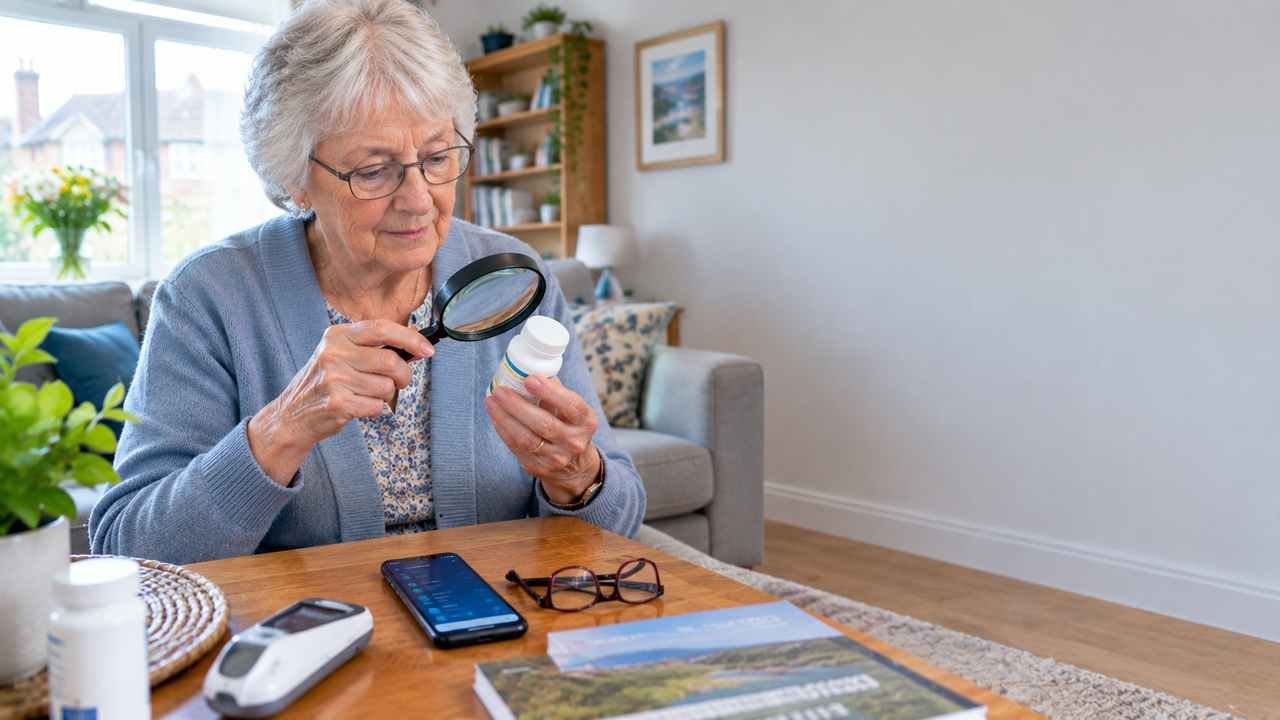
For many older people, losing some of their eyesight is often seen as an unavoidable part of getting older. Reading letters becomes harder, recognising faces from a distance can be difficult, and everyday tasks that once seemed simple may suddenly require extra time or support.
What many pensioners don’t realise, however, is that if a sight condition affects their daily life, they may be entitled to financial help from the Department for Work and Pensions (DWP). Depending on individual circumstances, some older people could receive up to £458 a month through Attendance Allowance—a benefit designed to help people over State Pension age with the extra costs of living with a disability or long-term health condition.
The payment isn’t based on a specific diagnosis or the fact that someone wears glasses. Instead, it depends on how much help a person needs because of their condition.
Why eyesight problems may qualify for support
Many eye conditions become more common with age. Conditions such as macular degeneration, glaucoma, diabetic retinopathy and cataracts can all make everyday life more challenging.
For some people, reduced vision means they need help preparing meals, taking medication safely, getting dressed or moving around the home without risking a fall.
Attendance Allowance is intended to provide extra financial support for people whose health condition means they need care or supervision during the day, at night, or both.
It’s the impact of the condition—not its name—that matters when eligibility is assessed.
How much could you receive?
Attendance Allowance is paid at two different weekly rates, depending on the level of care or supervision a claimant needs.
People who require help during either the day or the night may qualify for the lower rate, while those who need support both during the day and at night could receive the higher rate.
At current payment levels, the higher rate can amount to around £458 a month, although the exact amount depends on the official benefit rates in force.
The money is paid directly to the claimant and can be used in whatever way best supports their daily life.
You don’t need a carer to qualify
One of the biggest misconceptions about Attendance Allowance is that someone must already have a professional carer visiting their home.
That isn’t true.
Many successful claimants live independently and receive no formal care at all.
The DWP looks at the help you reasonably need, rather than whether somebody is currently providing that help. If poor eyesight means you would benefit from assistance with everyday activities, you may still qualify.
This is one reason many eligible pensioners never make a claim—they assume they won’t meet the criteria because they manage on their own.
Income and savings are not usually taken into account
Unlike some other benefits, Attendance Allowance is not means-tested.
That means your income, savings or whether you own your home do not normally affect your eligibility.
Receiving a private pension or the State Pension also doesn’t automatically prevent you from claiming.
Instead, the decision focuses on how your health condition affects your ability to manage daily life safely and independently.
Could claiming unlock other support?
In some situations, receiving Attendance Allowance may lead to additional financial help.
Depending on your household circumstances, it could affect entitlement to other benefits or increase the amount of support available through certain means-tested schemes.
Some local councils also offer additional assistance to older residents receiving disability-related benefits.
Because every case is different, it’s worth checking whether a successful claim could have wider financial benefits.
Why many older people miss out
Charities supporting people with sight loss have long said that Attendance Allowance remains one of the most underclaimed benefits among older adults.
Some pensioners assume deteriorating eyesight is simply part of ageing and never think to apply.
Others believe they must be registered as blind before becoming eligible.
Neither assumption is necessarily correct.
Many claims are based on the practical difficulties a person experiences rather than a particular medical label or certificate.
What should you consider before applying?
If your eyesight has worsened over time, think about how it affects your normal daily routine.
Ask yourself questions such as:
- Do you need help preparing food safely?
- Do you struggle to manage medication?
- Do you need supervision to avoid accidents around the home?
- Is moving around unfamiliar places becoming more difficult?
- Do you regularly rely on family members for support?
Being honest about the challenges you face can help you understand whether it may be worth exploring a claim.
Don’t ignore changes in your health
Many people gradually adapt to sight loss without realising how much their daily life has changed.
Tasks that once took a few minutes may now require assistance or extra planning, yet because the change happens slowly, it’s easy to underestimate the impact.
Reviewing your circumstances from time to time can help ensure you’re not missing out on support designed for people in exactly that situation.
Final thoughts
Poor eyesight doesn’t automatically qualify someone for Attendance Allowance, and there is no guaranteed £458 monthly payment simply because a person has an eye condition. However, if your vision problems mean you need regular help or supervision with everyday activities, you could be entitled to valuable financial support from the DWP.
For many pensioners, the benefit provides extra money to help maintain independence and manage the additional costs associated with sight loss. If your condition has made daily life more difficult, checking your eligibility could be a worthwhile step.