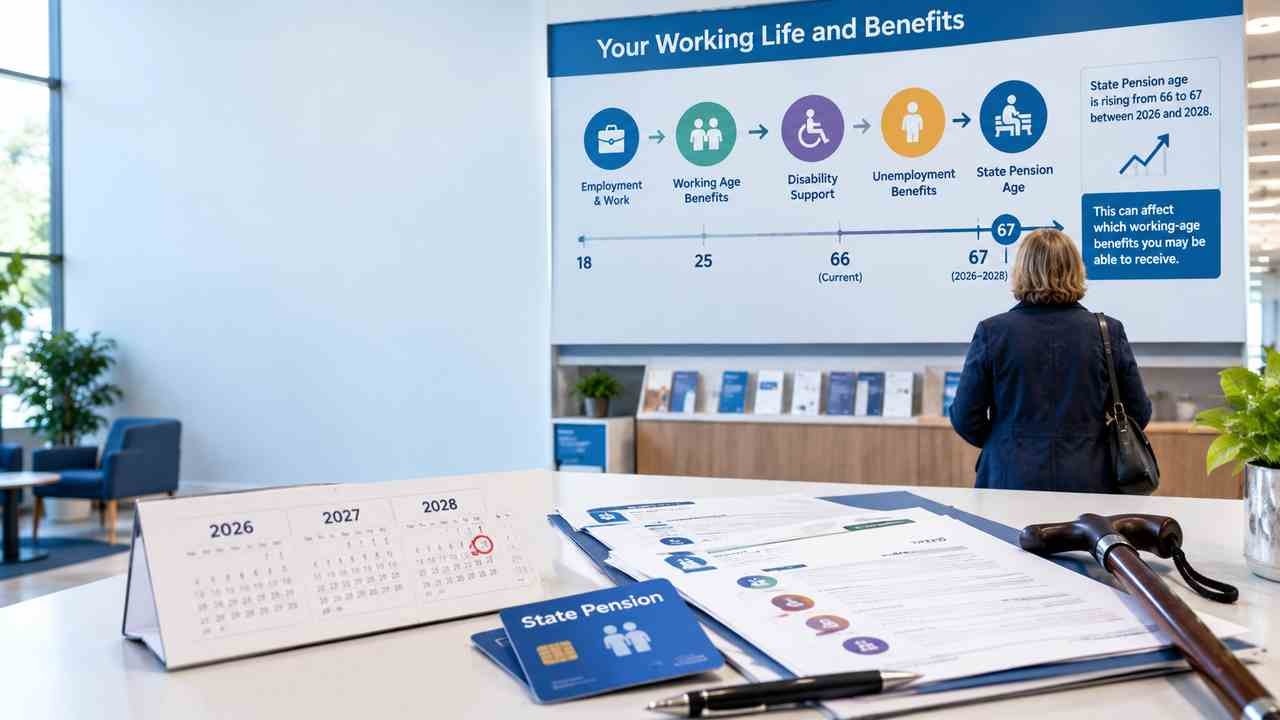
Reaching State Pension age is an important milestone for millions of people across the UK. For many, it marks the beginning of retirement and the point at which they can start receiving their State Pension. However, it can also bring significant changes to the benefits they are entitled to claim.
Many people are unaware that once they reach State Pension age, they may no longer be able to make new claims for certain working-age benefits. Instead, they may need to apply for different types of financial support designed specifically for pensioners.
Understanding how the rules change can help people avoid confusion and ensure they continue receiving the support they are entitled to.
Why benefits change at State Pension age
The UK benefits system is divided into working-age benefits and pension-age benefits. Once someone reaches State Pension age, they are generally expected to move from one system to the other.
This doesn’t necessarily mean financial support ends. Instead, it often means different rules apply and different benefits become available.
For anyone approaching retirement, knowing which benefits change can make planning much easier.
Which benefits can no longer be claimed?
After reaching State Pension age, people are generally unable to make new claims for some benefits that are intended for working-age adults.
These can include:
- Income-based Jobseeker’s Allowance (JSA)
- Income-related Employment and Support Allowance (ESA)
- Universal Credit in many circumstances for new pension-age claimants
Instead, pensioners may need to explore other forms of financial support if they have a low income or need help with everyday living costs.
The exact rules depend on individual circumstances, including whether someone is claiming as part of a couple.
What support is available instead?
Although some working-age benefits are no longer available, several pension-age benefits may provide valuable financial help.
Depending on personal circumstances, eligible pensioners could qualify for support such as:
- State Pension
- Pension Credit
- Attendance Allowance
- Housing Benefit (for some existing claimants and eligible circumstances)
- Council Tax Reduction, depending on local authority rules
Each benefit has its own eligibility criteria, so entitlement will vary from person to person.
Pension Credit is often overlooked
One of the most commonly missed benefits is Pension Credit.
Many older people assume they earn too much to qualify, particularly if they receive the full State Pension or have a small private pension.
However, eligibility depends on a range of factors, including household income and circumstances. In some cases, even a small Pension Credit award can unlock access to additional financial support.
For that reason, it’s often worth checking eligibility rather than assuming you won’t qualify.
Existing claims may be different
It’s important to remember that people who are already receiving certain benefits before reaching State Pension age may not automatically lose them overnight.
Some existing awards can continue under specific rules, while others may change as personal circumstances are reviewed.
The key difference is that making a new claim after reaching State Pension age may not be possible for some working-age benefits.
If you’re unsure how your existing claim could be affected, checking with the relevant authority is the safest approach.
Planning ahead can prevent surprises
Many people focus on when they’ll receive their State Pension but spend less time thinking about how other benefits may change.
Reviewing your finances before reaching State Pension age can help you understand:
- Which benefits may end.
- What new support you could claim.
- Whether your retirement income will be enough to cover everyday costs.
- If you’re entitled to additional pension-age benefits.
Preparing in advance can make the transition into retirement much smoother.
Don’t rely on headlines alone
Headlines suggesting people “can no longer claim benefits” can sound alarming, but they don’t tell the full story.
In many cases, support doesn’t disappear—it simply changes. While some working-age benefits are no longer available for new claims after State Pension age, pensioners may qualify for other forms of financial assistance instead.
Understanding the difference is essential to making informed decisions about your finances.
Final thoughts
Reaching State Pension age brings important changes to the UK’s benefits system. While some working-age benefits are no longer available for new claims, many pensioners may qualify for alternative support through benefits such as Pension Credit, Attendance Allowance or other pension-age schemes.
If you’re approaching retirement, taking time to review your benefit entitlement and understand the changes could help ensure you continue receiving the financial support you’re eligible for and avoid missing out on valuable assistance.