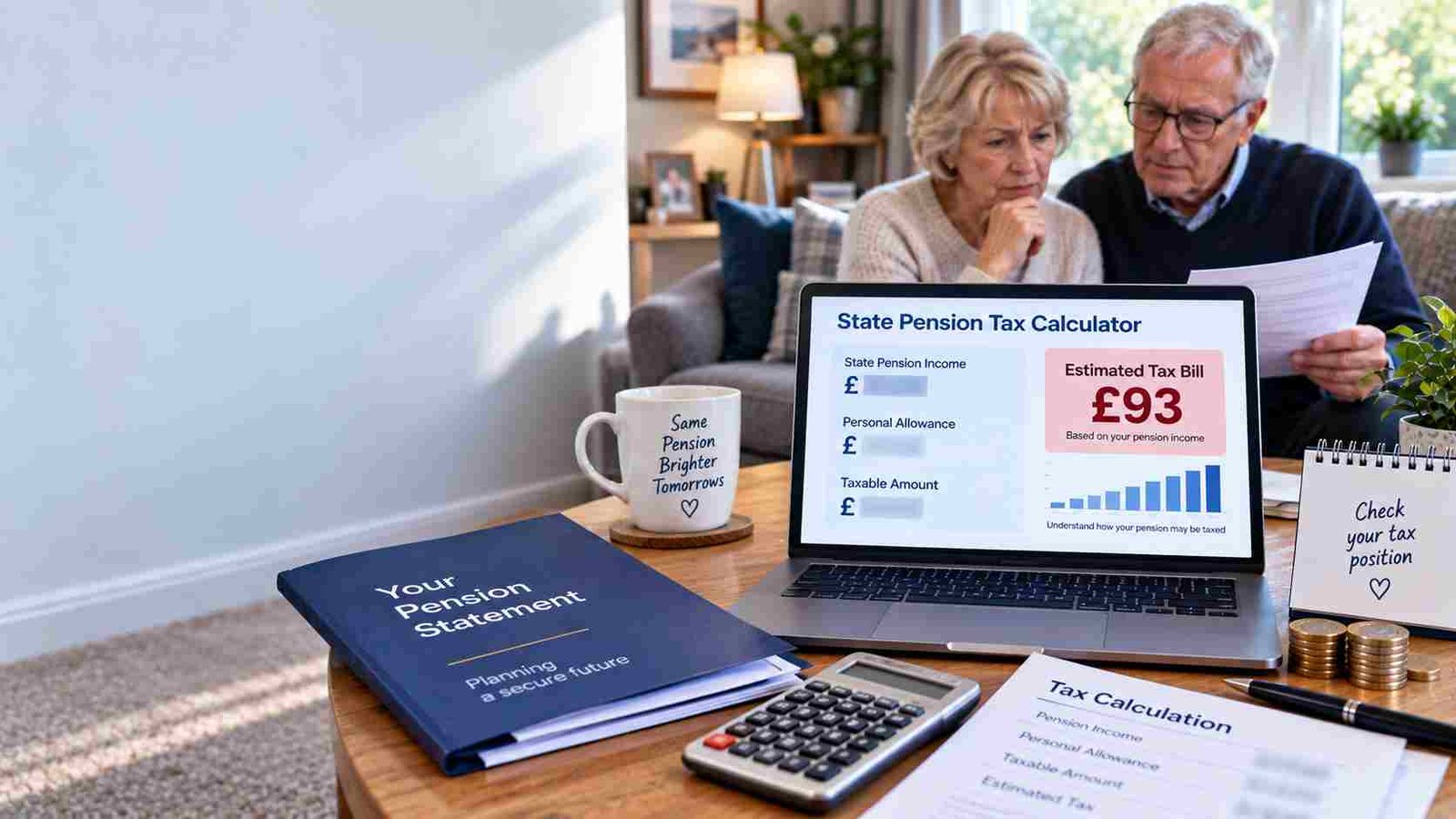
Millions of UK retirees are being urged to keep an eye on their tax position after fresh reports suggested some State Pension recipients could face an additional £93 tax bill. While the figure has attracted attention, it does not apply to every pensioner and is linked to individual income and tax circumstances rather than a new charge on the State Pension itself.
As the State Pension continues to rise under the Triple Lock, more retirees may find that their total annual income moves closer to – or above – the UK’s income tax threshold. For some people, this could result in a modest tax liability if they receive income from more than one source.
Here’s what the latest reports mean and who could be affected.
Why Could Some Pensioners Face a £93 Tax Bill?
The reported £93 tax bill is not a new tax introduced by the Government. Instead, it reflects the potential amount some retirees could owe if their overall taxable income exceeds the Personal Allowance.
Many pensioners receive income from several sources, including:
- The State Pension
- Workplace pensions
- Private pensions
- Part-time employment
- Savings or investment income
If these combined sources push total taxable income above the tax-free allowance, Income Tax may become payable.
Does This Affect Every State Pensioner?
No.
The vast majority of pensioners will not automatically receive a £93 tax bill simply because they claim the State Pension.
Whether you pay tax depends on your total taxable income, not the State Pension alone. Pensioners whose income remains below the Personal Allowance generally will not pay Income Tax.
The amount owed, if any, will vary depending on each person’s financial circumstances.
Why Is This Becoming an Issue?
The annual increase in the State Pension has been welcomed by many retirees, helping them cope with rising living costs.
However, if tax thresholds remain unchanged while pension payments increase, more people could gradually become liable for Income Tax. Economists often describe this as “fiscal drag”, where higher incomes move people into the tax system even though tax rates have not changed.
This does not necessarily mean pensioners are worse off overall, but it can reduce the value of future pension increases.
Who Is Most Likely to Be Affected?
Retirees who may need to pay closer attention include those who:
- Receive the full New State Pension.
- Have a workplace or private pension.
- Continue working after retirement.
- Receive rental or investment income.
- Have several taxable income sources.
People whose only income is a reduced State Pension are less likely to be affected.
Should Pensioners Take Any Action?
Most pensioners do not need to take immediate action.
However, it may be worth:
- Checking your annual pension income.
- Reviewing any workplace or private pension payments.
- Looking at your tax code if you pay tax through PAYE.
- Monitoring HMRC correspondence for any updates.
- Seeking independent tax advice if you have multiple income sources.
Reviewing your finances regularly can help avoid unexpected tax bills.
Don’t Be Misled by the Headline
The £93 figure is an estimate based on certain income scenarios and should not be viewed as a universal charge affecting all retirees.
Whether you pay any tax—and how much—depends entirely on your personal financial situation, including the amount of taxable income you receive during the tax year.
There has been no announcement of a new standalone £93 tax on the State Pension.
What to Watch Next
The Government is expected to confirm future State Pension rates and tax-related updates in the coming months. Pensioners should watch for official announcements on:
- Annual State Pension increases.
- Income Tax thresholds.
- Triple Lock decisions.
- HMRC guidance for pension income.
These updates will provide a clearer picture of how retirement income could be affected in the next financial year.
Final Thoughts
Reports of a £93 tax bill for some retirees highlight the importance of understanding how rising pension income interacts with the UK’s tax system. While the headline may sound alarming, it does not mean every State Pension recipient will face an extra charge.
For most pensioners, the key is to keep track of total taxable income, check HMRC communications and stay informed about future State Pension and tax announcements. A quick review of your finances today could help prevent unexpected surprises later.